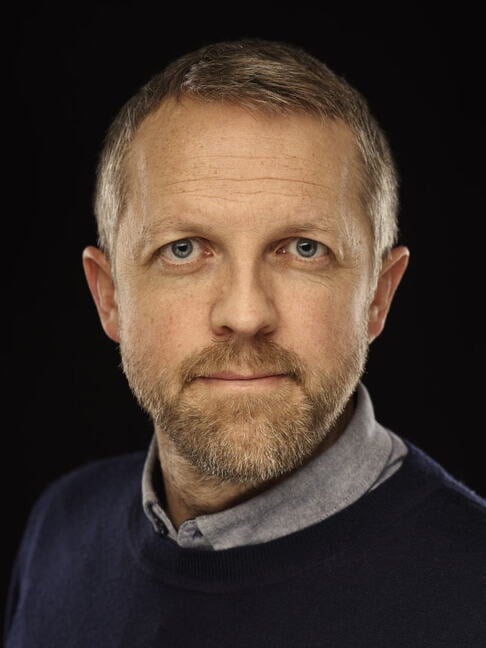
The Grimen lecture 2026, Johannes Lindvall: "Technological Innovations and Political Change"
How has technological change shaped politics, power, and working life? Historical perspectives from Johannes Lindvall, Professor of Political Science.
How has technological change shaped politics, power, and working life? Historical perspectives from Johannes Lindvall, Professor of Political Science.
At a time when some of the world’s leading technology firms appear to be on the cusp of major breakthroughs in artificial intelligence, robotics, and bioengineering, it is worth stepping back to consider how technological innovations have influenced politics in the past, and what we might learn from those experiences.
The first part of the lecture examines the direct effects of technological change on political institutions and government. Drawing on historical examples, it asks how transport, communication, and information technologies have shaped political organizations, expanded administrative capacities, and changed how governments monitor societies, exercise authority, and provide public services.
The second part turns to the indirect political effects of technological change via the labor market, especially the decline and disappearance of occupations, which are bundles of tasks associated with recognized titles and social identities. Drawing on historical and contemporary examples, the lecture asks why technology-driven occupational decline sometimes leads to withdrawal and marginalization but at other times produces mobilization and political conflict.
The talk will be followed by a conversation with Professor Emeritus Kalle Moene, Department of Economics, University of Oslo.
Johannes Lindvall holds the August Röhss Chair in Political Science at the University of Gothenburg. His main research interests are comparative politics, political history, and political economy. Lindvall has been a visiting research fellow at Harvard University and Oxford University and is currently affiliated with the Institut d’études politiques de Paris (Sciences Po) and Nuffield College, Oxford.
His most recent book is An Introduction to Comparative Politics (global.oup.com). He currently leads an ERC Advanced Grant project on Dying Occupations and Political Change (gu.se/en).