Aphasia makes online searching hard – A democratic problem
Every year, more than 5,000 people in Norway are affected by aphasia. When language fails, using search engines to find information becomes almost impossible.

Kort oppsummert
- Thousands in Norway struggle to search online because of aphasia.
- This is a democratic issue since it limits their access to information.
- Search engines need better design to make them more accessible.
- Librarians could play a key role in promoting inclusion and improving digital access for people with aphasia.
Parts of this text have been created using M365 Copilot. The text has been quality assured by OsloMet.
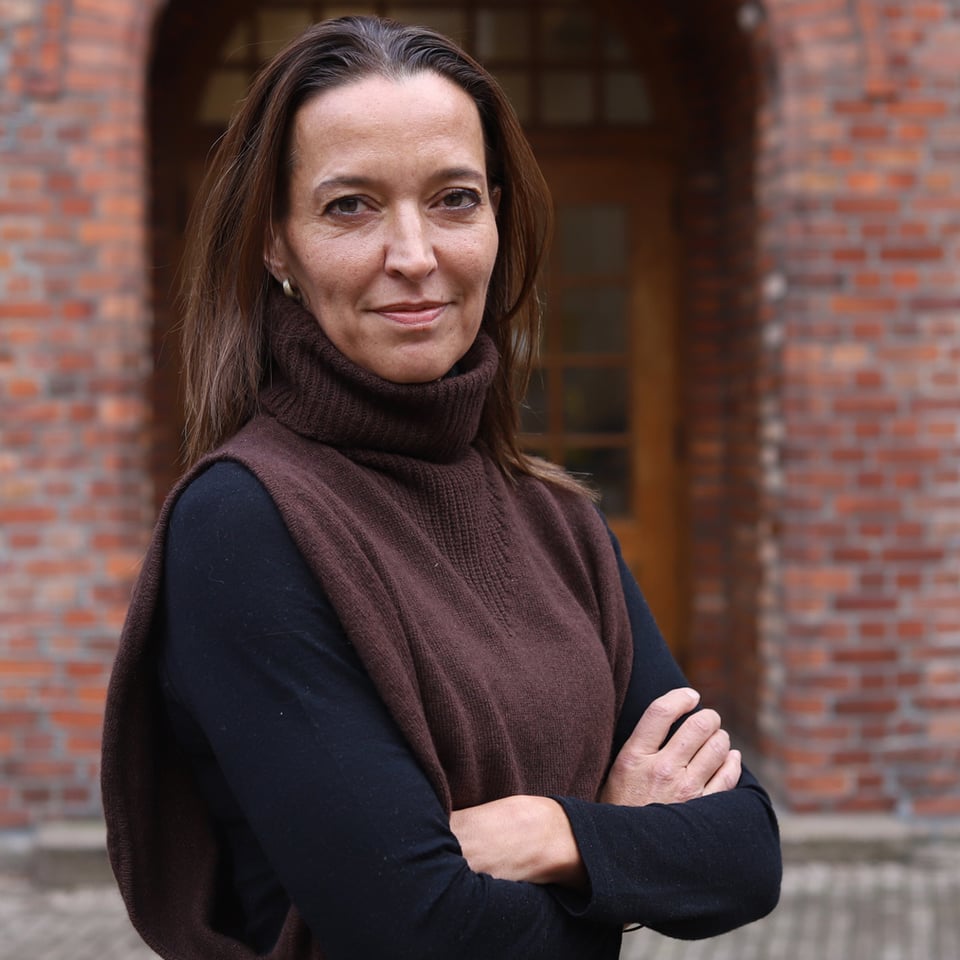
“We need to rethink how search engines work and what kind of support we offer people with aphasia,” says researcher Birgit Kvikne at the Department of Archivistics, Library and Information Science at OsloMet.
Aphasia is a language disorder that can occur after brain injury. It makes speaking, reading, writing, and understanding words difficult.
Kvikne has studied how aphasia impacts the ability to search for information and what that means for independence and participation in society.
She believes librarians could play a key role in inclusion.
A democratic principle
A core principle of democracy is that everyone should be able to participate.
“To do that, you need access to information,” says Kvikne.
In today’s digital society, online services and search engines like Google are essential.
In Norway, public search systems and certain private services aimed at the Norwegian market are legally required to be universally designed and accessible to all.
“They’re not. They exclude people with aphasia,” states Kvikne.
A growing group
“Searching online requires language skills, but this group has lost their language,” says Kvikne.
Aphasia affects around 5,000–6,000 people in Norway every year, mostly due to stroke. As more people survive strokes, the group keeps growing.
“That means a large number of people are shut out from this part of society. It’s a democratic problem.”
Trying new strategies
To use search engines, you need to come up with keywords, spell them correctly, and understand and evaluate the results. That’s extremely challenging with aphasia.
Many therefore try new strategies.
Some prefer browsing instead of searching. They navigate through categories, menus, or links from page to page.
It’s less demanding because it’s more visual and reduces the need to formulate specific keywords.
“But the downside is that the information you find is much more random,” says Kvikne.
Some also use image searches to look for words.
Shame and powerlessness
Others get help from family, but that takes time, patience, and trust
“That can be hard if you want to search for something private,” Kvikne explains.
Her research shows these barriers make searching so time-consuming, frustrating, and exhausting that many people with aphasia give up entirely.
“That reinforces feelings of isolation and loss. People feel shame, helplessness, and a loss of independence,” says Kvikne.
Pictures and icons
Kvikne believes search systems must be designed differently.
“That is needed to include people with aphasia in the digital society.”
She suggests services should allow for more spelling errors, offer better word suggestions, and use more visual interfaces with pictures and icons—like many apps do.
“Maybe there could even be a feature where you upload a picture or drawing?”
She also thinks artificial intelligence could eventually provide good solutions by analyzing search behavior.
Librarians as part of the support system
Today, speech therapists make up most of the support system for people with aphasia.
Kvikne believes closer collaboration between speech therapists and librarians would be an important step toward inclusion.
“Librarians know how to search, how search systems work, source criticism and trust, and how to find relevant information. They can offer courses and individual guidance.”
The right to information
Search systems are based on research, but people with aphasia are often excluded because traditional research methods require participants who can express themselves clearly.
Kvikne argues research must adapt to gain vital knowledge about this large group.
“To achieve true universal design and accessibility, we need to understand the extremes—the people who differ most from the average.”
She points out that search systems designed for those with the greatest language challenges can offer features that benefit many others as well.
“This isn’t about special adaptations—it’s about universal design based on knowledge, and the right to information.”
Reference
Kvikne, B. (2025). «Nobody talks to us … Nobody asks us». A study of aphasia and information seeking» (nva.sikt.no). PhD thesis, OsloMet.
Research news
- Childhood, school and education
- Information systems and technology
Education as resistance in Gaza
During the brutal war in Gaza, young Palestinians risk their lives to go online and pursue an education. For many, war itself is a source of motivation.
- Health and social work
- Information systems and technology
Using artificial intelligence to detect and fight dementia
Dementia affects millions of people each year. It’s a problem that most of us will encounter in our lives and it does not yet have any cure or even effective early detection methods.
- Health and social work
- Information systems and technology
Slik kan synshemmede få hjelp av kunstig intelligens
Navigasjonsverktøy for synshemmede er ofte upraktiske, ikke-bærbare og krever mye opplæringstid. Raske fremskritt innen kunstig intelligens og stadig mer datakraft i smarttelefoner gir derimot nye muligheter.
- Health and social work
Measuring brain activity to discover mental health issues
Could there be a way for your doctor to diagnose depression and anxiety based on your brain activity?
- Information systems and technology
Making digitalisation work for all citizens
We can access bank accounts, healthcare, and social benefits through the internet using our phones and computers, yet not everyone is able to take advantage of these technologies.
Forskningsartikkel av: Faculty of Social Sciences (SAM)