How can we make the best possible recovery after a stroke?
Every year, around 12,000 Norwegians have a stroke. Research fellow Solbakken has good advice for those affected.
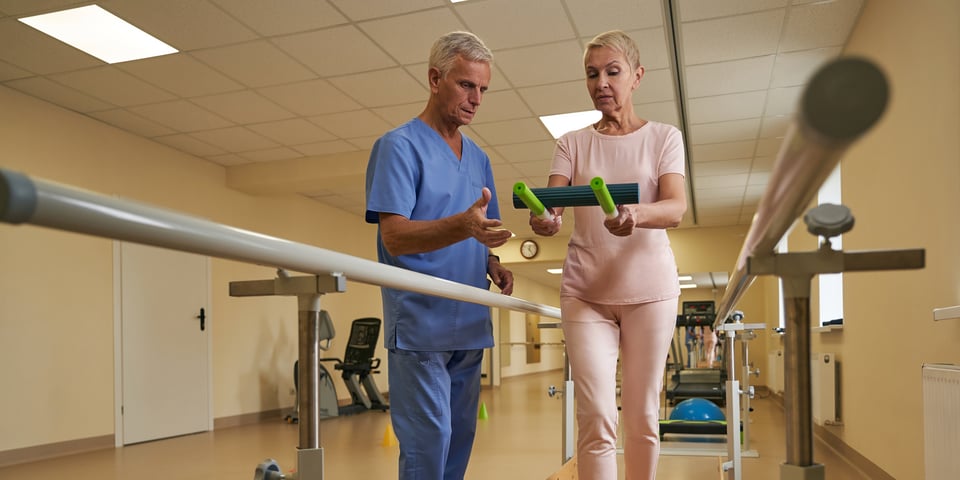
Symptoms of a stroke include paralysis and loss of feeling in the arm or leg as well as facial paralysis and difficulties with language or speech. This can also lead to concentration and attention difficulties.
A stroke causes brain cells to be damaged and die, making it important to get to a hospital for treatment as quickly as possible. Emergency treatment can be crucial to the severity of the outcome.
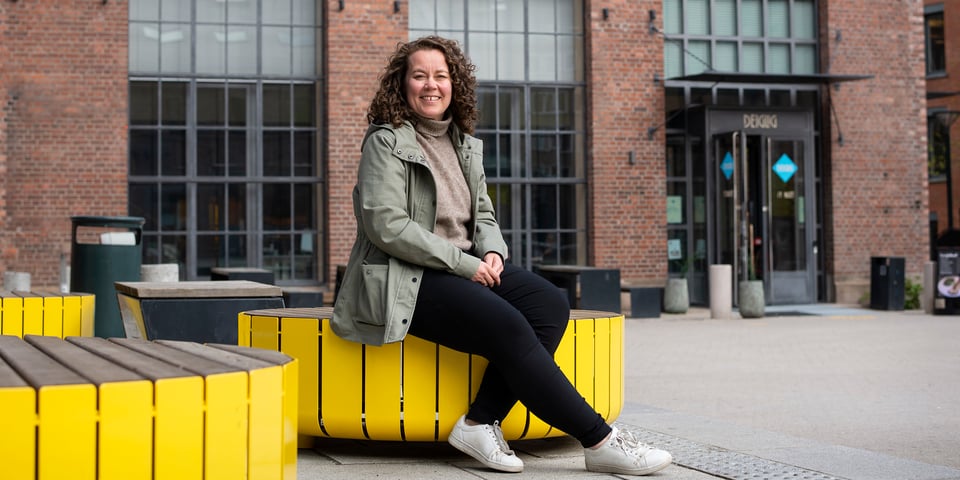
“A stroke is an emergency incident, and most people don’t know much about it. Many people probably feel a bit uncertain since having a stroke is such a major upheaval,” says Liss Marita Solbakken.
She is a research fellow at OsloMet and is writing her thesis on the aftercare of stroke patients during the initial period after discharge from hospital.
Figures from the Norwegian Directorate of Health show that around a third of stroke patients return quickly to their previous level of function, whilst around a third have a somewhat reduced level of functioning but can live at home with assistance.
The remaining third are severely affected and must live in a nursing home, or risk dying within the first year after discharge. The stroke mortality rate has dropped and is now just below 25 per cent.
Work on what you want to be good at
Strokes can affect both older and younger people. Most are older adults, but approximately 21 per cent of stroke patients are under 65 years of age. They are midway through life when the stroke occurs.
They are still working, and many have children to take care of.
“Rehabilitation is crucial to ensuring that stroke patients are as self-reliant as possible.”
“Rehabilitation targeting specific tasks is good, for example, learning to walk again, use cutlery and use a phone.”
This means that you must practise the task you want to get better at.
Research has also shown that many people benefit significantly from rehabilitation at home. This means practising the daily activities you want to master and manage to do them several times.
Day-to-day challenges are often based in the home, and you might not notice some of these challenges until you return home.
You might discover that you forget things, have difficulties finding your bearings, and feel more tired.
“If you discover new challenges when you come home, you should not hesitate to contact a therapist in the municipality for advice and aftercare,” adds Solbakken.
Talk to others
Solbakken thinks many could benefit from talking to others who have suffered a stroke.
“It can be helpful to share experiences with each other and it can be comforting to talk to someone who has experienced the same thing as you. You can learn from their stories, see their progress, and give and receive support. This can be a source of motivation."
It is also helpful to learn more about strokes and rehabilitation.
“If you have any questions, ask your doctor or therapist, or others who have had a stroke. This helps you to find out what you can do yourself and what you can expect from others,” Solbakken advises.
“You will benefit most from being an active participant in your own rehabilitation, and from sharing your experience with your physiotherapist so that the activities are adapted to you and your goals.”
Advice for the patient
Research fellow Liss Marita Solbakken has the following advice for people who have suffered a stroke:
- Think about what you want to be able to do and share it with the people who can help you to achieve these goals.
- Talk to others who have had a stroke. Contact one of the stroke associations.
- Be active! Repetition and varied activities are important to recovering from a stroke.
- Nurture a sense of mastery. Celebrate small and big improvements and reflect on what you have achieved by working on your personal goals.
- Tell your doctor or physiotherapist if you notice difficulties after returning home from hospital.
References
- Stroke patients' and informal carers' experiences with life after stroke: an overview of qualitative systematic reviews (pubmed.ncbi.nlm.nih.gov).
- Patients' experiences of involvement, motivation and coping with physiotherapists during subacute stroke rehabilitation - a qualitative study (tandfonline.com).
Related research
- Health and social work
- Information systems and technology
An AI solution to aches and pains
The Centre for Intelligent Musculoskeletal Health (CIM), OsloMet's new Centre of Research Excellence, uses AI to develop innovative and effective interventions for musculoskeletal health.
- Health and social work
Anxiety and depression more common among adults with ADHD
According to new research, there may be several reasons for this.
- Information systems and technology
This robot can help children with health challenges out of isolation
Even when the pandemic has been brought under control, many children will be unable to attend school for various reasons. Can robots help improve their school experience?
- Health and social work
Mothers in low-income countries experience serious health problems after giving birth
Midwives in several countries are working together in an OsloMet project to save more women and children in low-income countries.
Forskningsartikkel av: Faculty of Health Sciences (HV)