How artificial intelligence can revolutionise assisted fertilisation
AI could make assisted reproductive technology significantly more effective, but professionals are often sceptical. There is a need to build greater trust among them, says researcher.
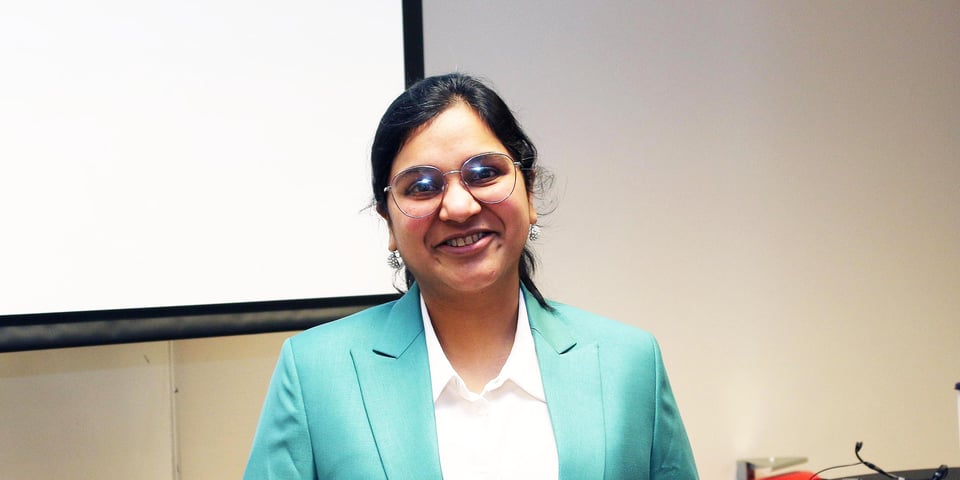
Akriti Sharma has been researching how AI can enhance assisted reproductive technology (ART).
Sharma’s doctoral work at OsloMet uses data from the fertility clinic Volvat Spiren in Oslo to develop
AI models that assist embryologists in evaluating and selecting embryos for transferring to the female uterus.
“The main goal was to develop AI models that can help embryologists in their daily tasks and provide better assessments of embryos”, Sharma explains.
An embryo is the early developmental stage of a human, spanning from fertilisation up until about eight weeks. After this it is considered a foetus.
Today’s solutions are expensive and provide little insight
Although AI tools for embryo assessment already exist, Sharma points out that they are often expensive due to the cost of licensing and difficult to interpret due to limited insight into the AI’s decision-making context.
“AI-driven tools can automate embryo assessment but are too expensive for many fertility clinics”, she notes.
Many medical experts are sceptical about using them due to the lack of explainable rationale behind the predictions that they provide.
This means that professionals do not have insight into how the artificial intelligence arrives at the assessments it has made.
The companies offering these solutions are commercial entities, making the tools proprietary secrets, which means they do not provide insights into how they function.
Sharma’s aim is to make AI models more accessible, transparent and comprehensible.
How assisted reproductive technology and AI work
She offers a simple explanation of assisted reproductive technology:
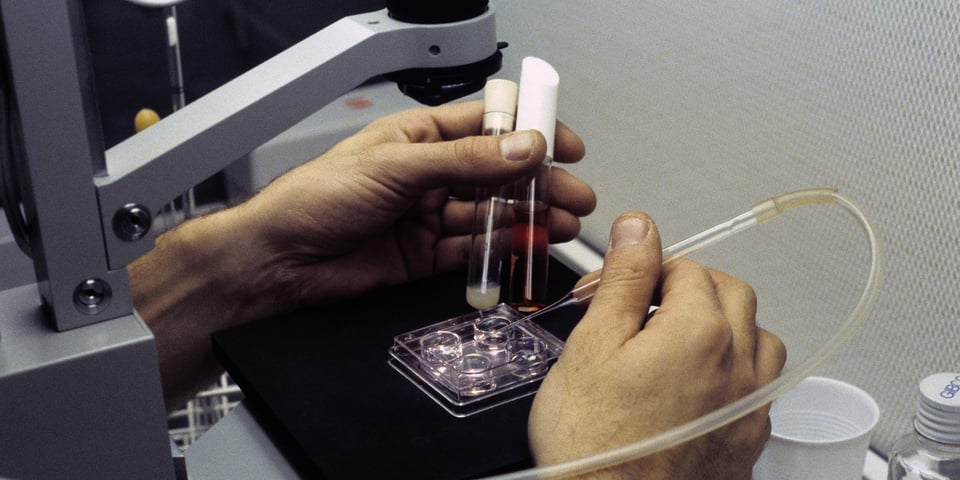
“In assisted reproductive technology, eggs and sperm are fused outside the body in a controlled environment. AI can assist medical experts by providing an automated assessment of embryo quality.”
AI can analyse large volumes of data and identify patterns that might not be immediately visible to human experts. This can be achieved through:
- Video or image analysis, used to assess the quality of an embryo by seeing how it changes and grows in shape and structure over time.
- Recognition of patterns that typically result in successful implantations and pregnancies.
- Combining patients’ data, such as age and smoking habits, with embryo morphokinetics, such as time of cell division or time to blastulate.
Explainable artificial intelligence gives better results
Sharma has utilised explainable artificial intelligence (XAI) to make AI models more understandable for embryologists.
“The intention of explainable AI is to clarify how AI arrives at decisions. Explainable AI was found to function as a ‘debugging’ tool, allowing us to validate whether the AI models consider correct patterns.”
Explainable AI can illuminate how AI models reach a decision, making it easier to identify errors or wrong patterns considered by the model. It can also ensure that the model focuses on relevant and biologically relevant patterns in data.
When embryologists understand how the AI model makes decisions, it is also possible to make adjustments so that the result is more accurate and reliable.
Building trust with explainable AI
Explainable AI clarifies AI technology, aiding developers in model optimisation and helping embryologists to trust AI decisions. This is crucial for building trust ensuring the effective use of AI in sensitive and important areas.
This is demonstrated by showing which parts of an embryo image the AI model focused on while assessing embryo quality.
In the future, interactive tools driven by AI can provide better insights into what the model is doing while allowing embryologists to adjust the model’s parameters for improving accuracy.
Sharma explains how her AI models can streamline fertility treatments:
“AI can automate low-risk tasks, enabling embryologists to focus on more complex decisions. This can make the fertility process faster and more efficient.”
Challenges with technical language and data quality
Sharma describes some of the biggest challenges that she has faced as a computer scientist:
“One of the greatest challenges was understanding the technical language of embryologists. Data quality and harmonisation were also significant hurdles. Once I understood their terminology, collaboration became much easier. The embryologists were eager to experiment with AI and provide feedback.”
A crucial part of Sharma’s research involved ensuring that the data from the fertility clinic was suitable for use by AI models.
“The data had already been collected, but it needed to be harmonised to be usable for AI”, Sharma says.
This meant converting it to a format that made it comparable and suitable for analysis. This work is critical for ensuring accurate and reliable AI assessments.
Concrete results from the research
Sharma summarises how her research can impact the future of fertility treatments and reproductive health:
“My findings have brought two communities together – AI experts and medical professionals – to solve a common problem effectively. This may eventually lead to better-integrated solutions in clinical practice.”
Sharma has already seen concrete results from her work, such as the automation of low-risk tasks and improved objectivity in embryo assessments.
“AI can make the process faster and more efficient”, Sharma concludes.
These practical applications can have immediate benefits for clinical practice.
Promising prospects, but more research is needed
Sharma’s research has the potential to enhance assisted reproductive technology by providing more objective assessments, automating processes and aiding embryologists in making better decisions.
However, Sharma emphasises the need for further research and testing to optimally integrate AI into fertility treatments. This means that data should be collected from multiple clinics to make the research results more robust.
She also wishes to make AI technology more accessible to clinics that may not be able to afford costly commercial solutions.
“Personal events in my life motivated me to work in this field”, Sharma says.
In this way, she hopes to make a societal difference.
Reference
Akriti Sharma: Application of Artificial Intelligence in Assisted Reproductive Technology, OsloMet thesis, 2025, no. 24.
Related research
- Health and social work
- Information systems and technology
Using artificial intelligence to detect and fight dementia
Dementia affects millions of people each year. It’s a problem that most of us will encounter in our lives and it does not yet have any cure or even effective early detection methods.
- Health and social work
- Information systems and technology
Slik kan synshemmede få hjelp av kunstig intelligens
Navigasjonsverktøy for synshemmede er ofte upraktiske, ikke-bærbare og krever mye opplæringstid. Raske fremskritt innen kunstig intelligens og stadig mer datakraft i smarttelefoner gir derimot nye muligheter.
Forskningsartikkel av: Faculty of Technology, Art and Design (TKD)