Using botox to prevent migraine and treat pain
Millions of people experience chronic pain and migraine, but until recently there were very few treatments available. That’s changing now, thanks to professor Parisa Gazerani’s work.

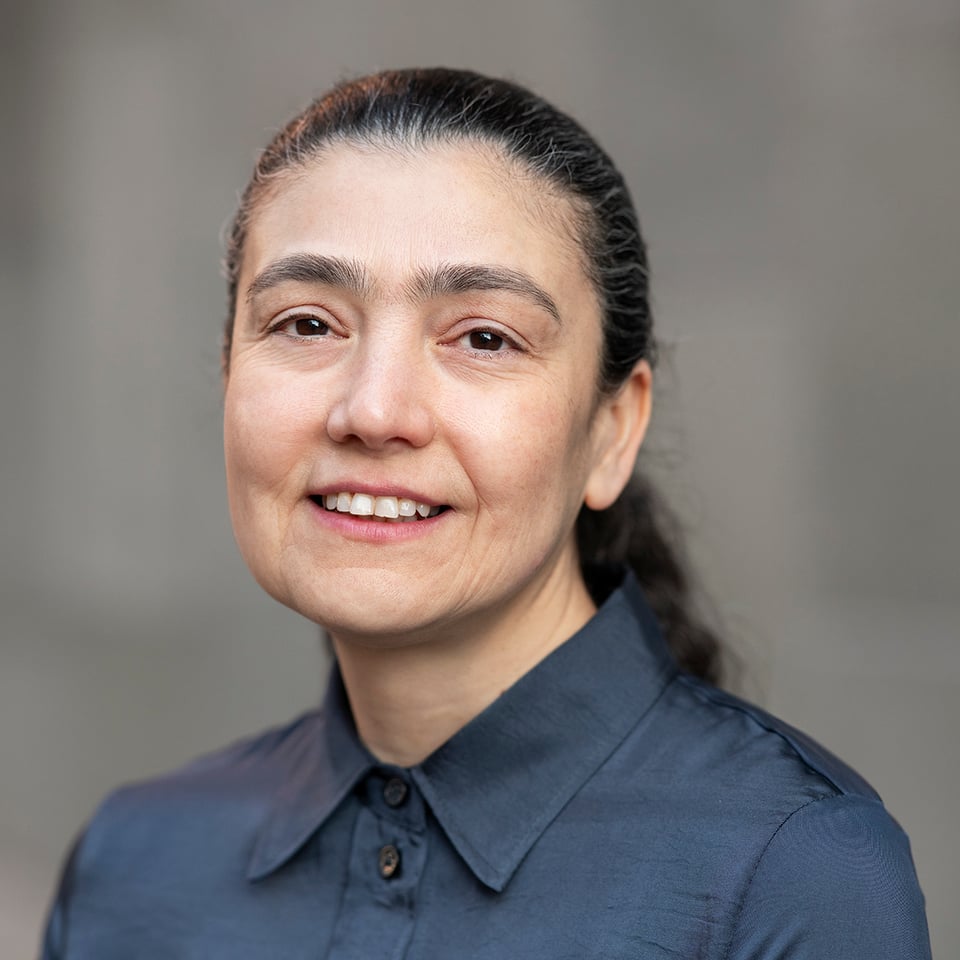
OsloMet recently awarded its prestigious Research Award to professor Parisa Gazerani for her groundbreaking work understanding how Botox can prevent migraine and treat chronic pain.
The award is a worthy recognition of a career dedicated to advancing pain research and offering potential relief to millions of people around the world.
At the heart of Gazerani’s research is the understanding that pain isn’t just a physical experience: it’s multidimensional and deeply personal.
“Pain is universal,” she says, “every individual feels pain differently, but as soon as you hear the word ‘pain’, people can relate.” This insight has shaped her holistic approach to pain management, one that takes into account not only biological mechanisms but also the psychological and social dimensions.
Neurological disorders like chronic pain and migraine can be a heavy burden on the patient, their family, and the greater economy. Despite affecting nearly 15 percent of the global population, migraine receives significantly less recognition than conditions like Alzheimer’s or Parkinson’s. Gazerani is determined to change this.
“The brain is the most fascinating and captivating organ; it's incredibly complex and all of our actions are connected to it. Through my research, I hope to offer better solutions for its disorders.”
It’s incredibly rewarding to see your work translate into something that helps patients.
From toxin to relief
For Gazerani, the drive to treat pain was sparked by witnessing patients struggle with ineffective treatments.
“When I worked as a clinical pharmacologist, patients would return dissatisfied and desperate for something new. If I can contribute, perhaps it would be the key to a pain-free life and giving people back their freedom.”
She has succeeded in this goal by helping repurpose botulinum neurotoxin A – better known as Botox, the cosmetic wrinkle-smoother – to treat chronic migraine.
Despite being the most toxic substance known, Botox’s therapeutic potential is extraordinary. In fact, it was stories of patients going in for cosmetic treatment and coming out with relief from their migraine that spurred researchers to investigate its potential for pain and headache management.
The challenge, however, was understanding why it worked.
“We’re still unraveling the exact mechanism,” Gazerani explains, “the proposed theory is that when Botox is injected into muscles in the face, it blocks the pain signaling processes that can lead to migraine.”
Her studies with animals showed that Botox injections provided pain relief and decreased the sensitivity of receptors in the muscles that can trigger a migraine.
Research helps around the world
What makes Botox particularly exciting is its significant advantages over other remedies. One treatment can provide pain relief for up to 12 weeks, with a lower risk of drug interactions and fewer side effects than other medications.
Gazerani played a pivotal role in validating these benefits. She dedicated eight years to rigorous studies, human clinical trials, and overcoming regulatory hurdles. These contributions were part of why the US Food and Drug Administration approved Botox for the prevention of chronic migraine in 2010.
“It was deeply meaningful to provide millions of people with another option for relief,” she reflects, “it’s a safer and more effective alternative to many existing treatments.”
Even though she’s based in Norway, Gazerani’s work is part of a greater scientific effort with global reach.
“Norway is at the forefront of research and innovation” she notes, “science has no borders, and good science thrives on collaboration. I see a broad future for this type of communication within the global research community.”
Recognition and inspiration
This award doesn’t just acknowledge Gazerani’s groundbreaking work to unravel the science of pain; it reflects her dedication to the individuals experiencing it.
“When you delve into the neuroscience of pain, you realize it’s a complex and diverse phenomenon. If you ignore any aspect – biological, emotional, psychological, or social – your treatment won’t succeed.”
For Gazerani, the award is more than just recognition; it’s validation.
“It confirms that I am on the right path,” she says, “the visibility and recognition show that what I’m doing is meaningful and has a real impact.”
This honor extends to her teaching and the inspiration she has given to her students, some of whom have expressed a newfound determination to pursue careers in neuroscience.
“That is truly priceless to me,” she reflects, “neuroscience is not easy, it has so many challenges and failures, but if I can inspire the next generation to persevere, that’s incredibly rewarding.”
Better understanding, better treatments
Looking ahead, Gazerani plans to continue addressing some of the most pressing and complex challenges in neuroscience. Her next project focuses on understanding pain in children and how to manage pain in neurodegenerative diseases like Alzheimer’s and Parkinson’s.
“These populations and their painful conditions have profound impacts on individuals and their families, and we still have so much to learn,” she explains.
To answer these questions, she is exploring how robots can assist nonverbal children and developing high-tech, real-time brain simulations to better understand brain structure and function. At the same time, she is advancing intelligent human brain models that could revolutionize neuroscience and accelerate drug discovery.
Her curiosity and compassion remain the driving forces behind Gazerani’s success. “A researcher can be a teacher and an innovator,” she reflects, “it’s incredibly rewarding to see your work translate into something that helps patients. My ultimate goal is to contribute, even in small steps, to improving the lives of people suffering from neurological disorders, especially those experiencing profound pain and suffering.”
References
Featured research
- Health and social work
- Working life, society and welfare
Slipping through the safety net
Norway and many other European countries have robust social safety nets. Yet they continue to fail their poorest citizens.
- Working life, society and welfare
Adult children increasingly help their elderly parents navigate the online world
New research from OsloMet reveals that adult children in Norway are more likely to help their elderly parents use the internet and their smart phone than with any other kind of task.
- Health and social work
- Information systems and technology
Using artificial intelligence to detect and fight dementia
Dementia affects millions of people each year. It’s a problem that most of us will encounter in our lives and it does not yet have any cure or even effective early detection methods.
Forskningsartikkel av: Faculty of Health Sciences (HV)