What happens when rivers are given rights?
Researchers have been looking at what happened when rivers were granted status as legal persons. In New Zealand, they are seeing particularly promising developments in indigenous peoples’ rights and conditions.
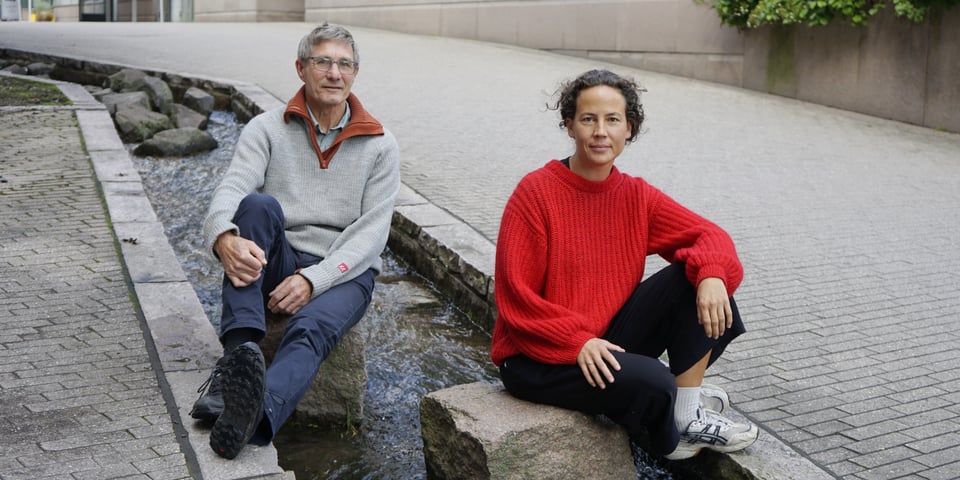
“This is a step in the right direction both to ensure nature’s rights and to rethink the relationship between people and nature,” says Axel Borchgrevink.
He is a social anthropologist and professor at the Department of International Studies and Interpreting at OsloMet and has led the research project “Riverine Rights”.
“But we have also found that the impact of granting rivers legal personhood depends in practice on systems that ensure that the river’s rights are respected. There are many obstacles still to be overcome.”
A new understanding of rivers
There was something of a revolution in our understanding of rivers some eight years ago. Rivers in Colombia, New Zealand and India were granted so-called “legal personhood”. This means that the rivers were given the status of a legal entity with their own rights and obligations. In many ways, the rivers were granted the same rights as a person.
“Many people have claimed that these legal innovations provide a new form of protection for the environment that is more in line with indigenous peoples’ ways of life,” Borchgrevink explains.
The research project has studied how the rivers’ status as a legal person has been implemented in practice. The three countries are very different in terms of governance and culture, and the decisions have had very different outcomes.
This is a step in the right direction both to ensure nature’s rights and to rethink the relationship between people and nature.
“It turns out that how the management of the river is organised and who can participate in decision-making processes are just as important as granting rights to the rivers,” says Malene Karensdatter Brandshaug. She is a social anthropologist and postdoctoral fellow at OsloMet, and has participated in the project.
New Zealand: ground-breaking in respect of indigenous law
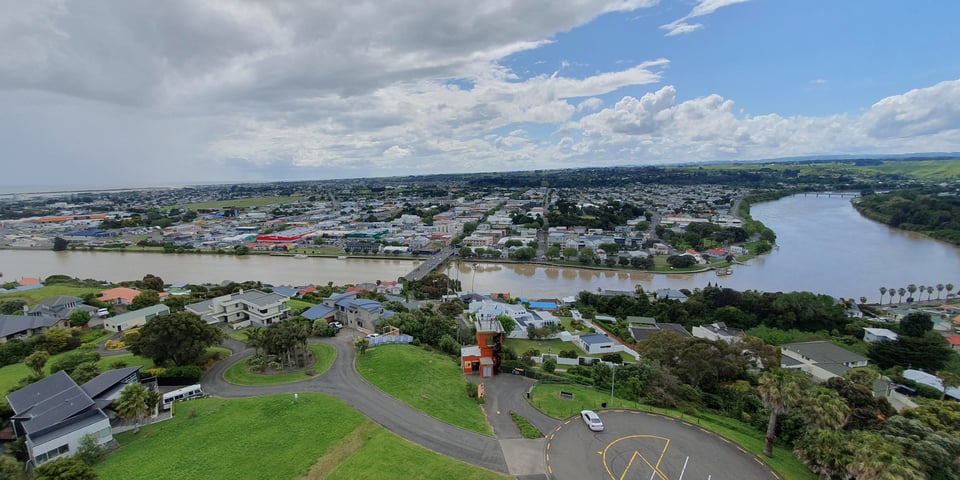
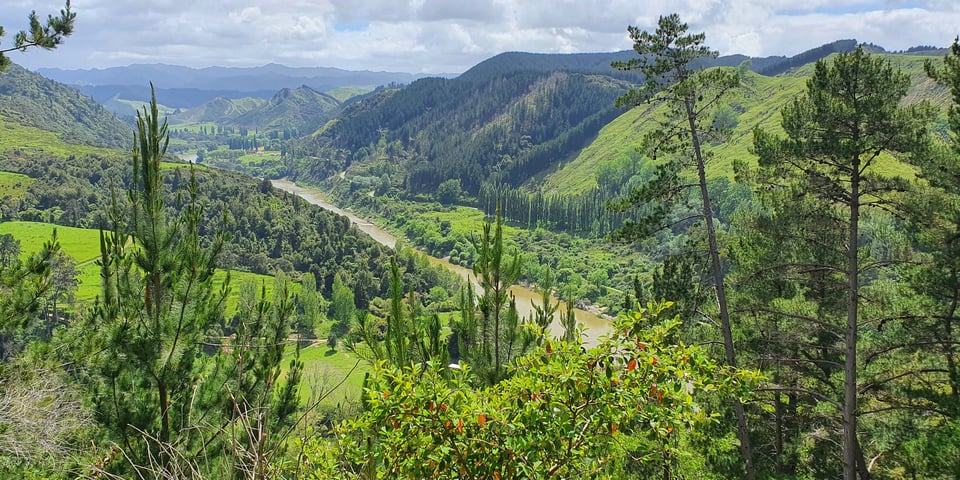
The Whanganui on the North Island is New Zealand’s third longest river. For the Māori who have lived along the river for 700 years, the Whanganui is more than just a river. They regard the river as an ancestor from whom humans are descended. It has also been an important source of food through fishing, especially for eel.
Over time, the construction of a hydropower plant in a neighbouring watercourse and run-off from agriculture have impaired the water quality and resulted in less water flow in the river. Fish stocks have also declined. Māori living along the river have been in talks with the authorities on the management of the river for many years.
“The Act that gives the Whanganui River the status of a legal person is in practice a recognition of Māori claims that go back at least 150 years,” Borchgrevink explains.
Since the introduction of the Act, the local Māori population has regained some of the control they had over the area before Great Britain colonised the country in 1840. According to the Act, all councils and committees that make management plans for the river must include representatives of the Māoris. The Māoris must always be involved in discussions when construction projects and other developments are proposed that might lead to possible interventions in nature.
A close connection between people and the river
Borchgrevink believes that it is these local democratic principles in the text of the Act that make the legislation particularly significant.
In his opinion, this Act is ground-breaking in terms of indigenous law and may help prevent future interventions in nature. Not least, he believes the Act will play a decisive role when the agreement with the power company that operates the water plant nearby is to be renegotiated.
Some researchers have raised objections that the concept of riverine rights may spark conflicts between natural rights and human rights.
“What we have seen in our research is that, on the contrary, it is probably primarily people’s rights that will be strengthened by this move,” says Borchgrevink.
“At the same time, it aligns with the Māori's views of the close connection between people and the river."
Colombia: no effect on pollution
In Colombia, illegal gold mining for many years has resulted in the Atrato River being contaminated with mercury. This has caused major health problems for the inhabitants of the villages along the river, which in 2015 took legal action against the authorities. In 2016, the Colombian Constitutional Court declared the Atrato a legal entity with rights, and that the pollution of the river was a violation of these rights.
“Unfortunately, there has not been any less pollution or fewer health problems since the legislation was passed,” says Borchgrevink.
The Colombian legislation has not been followed up with funding for necessary measures. Furthermore, because armed groups control several areas, the government has also failed to stop the illegal gold mining.
India: ambiguities in the judgment
The situation in India is different again. Here, it was a judge in the Uttarakhand High Court who managed to get a court decision passed granting the Ganges and its main tributary the Yamuna legal personhood.
But although Ganges originates in Uttarakhand, it runs through multiple states and continues on into Bangladesh. Some 800 million people live along the river, and most of them do not live in Uttarakhand.
“In this case, there are obvious issues related to jurisdiction, and it has been questioned whether a state high court judge was entitled to make this decision,” explains Borchgrevink.
In addition, other ambiguities in the judgment resulted in it being appealed to the Indian Supreme Court, which has stayed the judgment. The Act has therefore been suspended and is currently not in force.
“Part of the problem in India was that the initiative came from a judge, without there really being any pressure from the grassroots, or any social basis for the idea of legal personhood,” says Borchgrevink.
It turns out that how the management of the river is organised and who can participate in decision-making processes are just as important as granting rights to the rivers.
He is not surprised that the case has reached a stalemate.
Relevant in Norway too?
Malene Karensdatter Brandshaug is currently working on a postdoctoral project on environmental conflicts related to rivers and fjords in Norway. She says that the concept of riverine rights is starting to take hold in many places around the world.
“Loads of initiatives have popped up all over the world, on every continent."
The initiatives can come from grassroots levels, from individual legal experts, or from government authorities.
Here in Oslo, there is even an initiative to grant Akerselva and Oslofjord legal personhood.
“It is the only initiative in Norway that we are aware of so far,” says Brandshaug.
She believes that the phenomenon currently still feels a little foreign to the Norwegian environmental movement.
“If this were part of the broader public debate, it might have had a different outcome to what we have seen so far.”
References
Cribb, M., Macpherson, E., & Borchgrevink, A. (2024). Beyond legal personhood for the Whanganui River: collaboration and pluralism in implementing the Te Awa Tupua Act (tandfonline.com). The International Journal of Human Rights, 1–24.
Macpherson, E., Borchgrevink, A., Ranjan, R., & Vallejo Piedrahíta, C. (2021). Where ordinary laws fall short: ‘riverine rights’ and constitutionalism (tandfonline.com). Griffith Law Review, 30(3), 438–473.
McNeish, J. A., & Socha, J. M. (2024). Muddy waters: on the problematic political ecology of the Atrato ruling, Colombia (tandfonline.com). The International Journal of Human Rights, 1–21.
Upadhyay, K., & Nayak, B. P. (2024). Tracing the legal journey of petitions in the Uttarakhand High Court that became springboards for rights of rivers and nature in India (tandfonline.com). The International Journal of Human Rights, 1–20.