Created by potrace 1.11, written by Peter Selinger 2001-2013
NO
Search oslomet.no
  • About OsloMet
  • Study at OsloMet
  • Our research
  • Work for us
  • Alumni
  • University Library
  • Contact us
  1. OsloMet
  2. ...Intermediate levels are hidden
  3. Research news
  4. The world needs better data on refugees and displaced people

The world needs better data on refugees and displaced people

Record-high numbers of refugees create an urgent need for updated, accurate, and comprehensive statistics. – Absolutely crucial for making better policies.
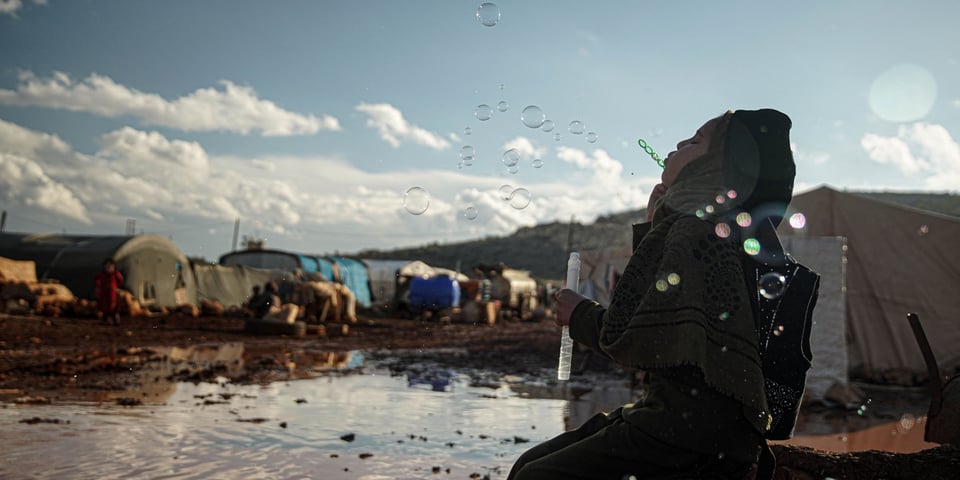
Child blowing bubbles in a muddy refugee camp, with tents and makeshift shelters in the background under a partly cloudy sky.

Forskningsartikkel av: Norwegian Institute for Urban and Regional Research (NIBR)

Publisert: 26.05.2025Sist oppdatert: 26.05.2025
Kristin Horn Talgø

The UN Refugee Agency (UNHCR) estimates that in 2024, there were 123 million people displaced.

Nearly 60 percent were displaced within their own country. Just over 40 percent had crossed a national border to seek protection. Most live in low- and middle-income countries.

Due to multiple global conflicts, the number could rise to nearly 140 million displaced people by the end of the year.

The need for knowledge about displaced people has never been greater. And now, something is happening.

“Several African governments are adapting their statistics to follow international standards for data on displaced people”, says Kristian Tronstad, Head of Research at the Norwegian Institute for Urban and Regional Research (NIBR) at OsloMet.

What’s Happening?

At the end of May, Tronstad will meet with other experts from national statistics offices, international organizations, and researchers in Abidjan, Côte d'Ivoire.

“The event addresses the urgent need for updated, accurate, and comprehensive migration statistics. Such data is essential for developing evidence-based policies”, says Tronstad.

This is the fourth edition of the African School on Migration Statistics (see fact box). The goal is to strengthen the production and use of statistics on refugees, internally displaced people, and stateless individuals in Africa.

The African School on Migration Statistics is an important initiative from the African Union and several partners.

The goal is to help African countries improve their migration statistics.

“We want to strengthen the national offices working with statistics”, says Sadiq Kwesi Boateng, Senior Statistical Advisor at Statistics Norway (SSB).

He is currently a long-term advisor to Ethiopia, based in Addis Ababa, and has previously worked for several years with UNHCR on statistics in Asia, Europe, and Africa.

Together with Tronstad, Boateng will participate in the gathering in Abidjan.

Over the past decade, SSB has been actively involved in international efforts to improve refugee statistics, both domestically and abroad.

Statistics Norway and Statistics Sweden (SCB) have a long-standing project to assist regional actors, says Boateng.

Already in 2014, SSB collaborated with UNHCR on a report on refugee statistics.  
SSB has also contributed to international recommendations on refugee statistics (IRRS), adopted by the UN Statistical Commission in 2018.

The agency is also an active participant in the Expert Group on Refugee, IDP, and Stateless Statistics (EGRISS).

Why Count?

Refugees need both immediate help and long-term planning. This is important for ensuring a safe daily life, integration into society, and access to necessary rights.

“To achieve long-term solutions, we need high-quality information about refugees and internally displaced people”, says Tronstad.

But there are many challenges related to refugee statistics. Different ways of defining and collecting data make it difficult to obtain accurate statistics.

“The goal of developing better statistics is to empower both people and institutions. This way, they can use high-quality statistics for planning and important decisions”, says Boateng.

What Works?

Tronstad will present a project that used public data to examine how refugees transition to work or education after the introduction program in the Nordic countries (nordicwelfare.org).

Together with research colleagues, he followed more than 250,000 adult refugees in Norway, Sweden, and Denmark from 2008 to 2016.

“I will explain how we used statistics from Norway, Denmark, and Sweden. We managed to follow all adult refugees who settled in Scandinavia through their first eight years”, says Tronstad.

The research shows what works when helping refugees integrate into society.

“For example, including general education in the introduction program for refugees with little prior schooling leads to better job opportunities over time”, says Tronstad.

Wage subsidies were also the most effective measure for getting people into work in all three countries.

The research also shows what doesn’t work.

For example, Denmark’s policy of quickly pushing refugees into work. They succeeded better in the short term than Norway and Sweden, but in the long term, refugees did not gain a stable foothold in the labor market.

The project used the analyses to develop more targeted measures for refugees.
Contact

  • Kristian Rose Tronstad

    Kristian Rose Tronstad

    • Head of research
    • +47 672 35 676

Featured research

  • A panoramic view of the sea of people who participated in the support rally for Ukraine in front of the Storting on February 24, 2025
    • Cities, regions and urban life

    Rising concern for capacity-overload in Norwegian municipalities

    “Record-high immigration and new restrictions aimed at making Norway less attractive to people fleeing their countries.” This is how a new OsloMet report summarizes the key developments in the field of immigration.

  • Overview of urban Bergen.
    • Cities, regions and urban life

    How do Norway, Sweden and Denmark address urban segregation differently?

    The Scandinavian countries have attracted migrants from around the world. While some of the measures they have adopted to combat segregation are similar, policy responses in the three countries also indicate significant divergences.

  • Close-up of a girls face, painted with a map of the European continent, and with striking eyes.
    • Working life, society and welfare
    • Cities, regions and urban life

    Europe move toward more restrictive, selective and temporary refugee policies

    Over the past decade, European countries have grown more restrictive in whom they grant protection, and for how long that protection is granted.

More featured researched

Forskningsartikkel av: Norwegian Institute for Urban and Regional Research (NIBR)

Publisert: 26.05.2025Sist oppdatert: 26.05.2025
Kristin Horn Talgø

OSLO METROPOLITAN UNIVERSITY
STORBYUNIVERSITETET

P.O. Box 4, St. Olavs plass
NO-0130 Oslo
Norway
Tel.: +47 67 23 50 00

Contact us

  • Facebook
  • LinkedIn
  • Instagram
  • Norwegian
  • Accessibility statement
  • Cookies policy
  • Employee directory
  • Employee website
  • Student website
  • Upcoming events
  • Work for us

How definitions are used in this article

  • Refugees have fled to another country.
  • Internally displaced people have fled within their own country.
  • Stateless individuals do not have citizenship in any country.
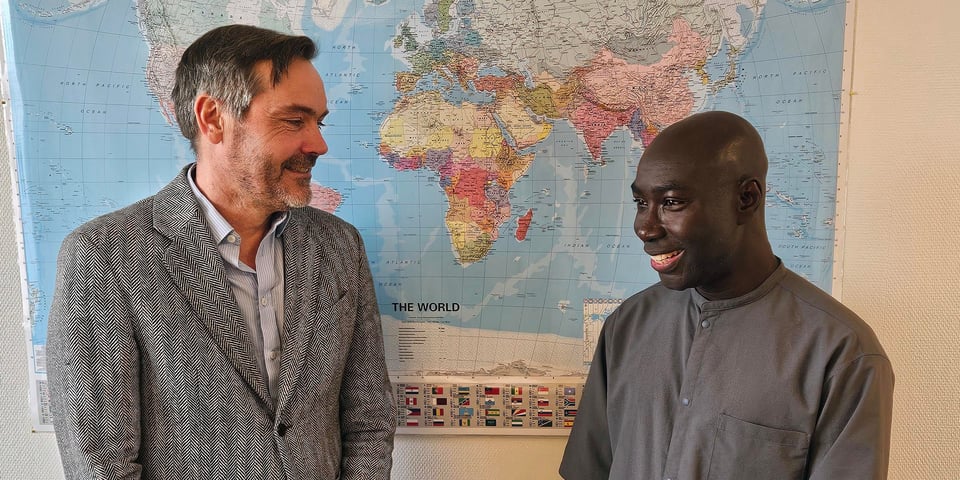
Kristian Tronstad and Sadiq Boateng standing in front of a colorful world map with national flags displayed below.
Kristian Tronstad and Sadiq Boateng are both committed to developing better statistics to support both people and institutions.

Examples of challenges in refugee statistics

  • Different definitions: Countries use different definitions for who counts as a refugee or internally displaced, making data comparison difficult.
  • Varying methods: Different data collection methods lead to inconsistent and unreliable statistics.
  • Poor data quality: Data is often of low quality due to non-standardized sources and methods.
  • National laws and regulations: Domestic laws can make harmonized data collection challenging.
  • Lack of resources: Many countries lack the resources and capacity to collect and report statistics effectively.
  • Ad hoc collection: Data is often collected on an ad hoc basis, meaning there is no systematic and continuous process.

About the African School on Migration Statistics

  • The fourth edition of the African School on Migration Statistics will be held in Abidjan, Côte d'Ivoire, from May 26 to 28, 2025.
  • The event is organized by the African Union’s Statistics Institute (STATAFRIC), Statistics Sweden (SCB), in collaboration with the UN Expert Group on Refugee, IDP, and Stateless Statistics (EGRISS), the National Institute of Statistics of Rwanda (NISR), the United Nations High Commissioner for Refugees (UNHCR), the International Organization for Migration (IOM), and the United Nations Statistics Division (UNSD).
  • The event in Abidjan aims to support member states and regional economic communities (RECs) in developing and maintaining the collection, production, analysis, and dissemination of statistics.
  • This will improve the quality of statistics related to displaced people.
  • The school will also serve as a platform for knowledge exchange, capacity building, and collaboration.