CAMELOT: Governing the long term in an age of non-linear climate risk
CAMELOT investigates how societies can govern long-term climate risks in an age of uncertainty and potential tipping points. It focuses on the capacities that enable decision-makers to understand possible futures and act on them today.

Climate change is not just a problem of scale—it is a problem of time. Some of the most consequential risks we face today may unfold over decades or centuries, yet our political and institutional systems are built to think in years—often only until the next election.
This mismatch is starkly visible in the growing risk of climate tipping points: abrupt, potentially irreversible changes in the Earth system that could reshape societies within a single generation. Consider the Atlantic Meridional Overturning Circulation (AMOC), a major ocean current system that regulates climate across the globe.
Scientists warn that its collapse could trigger cascading disruptions—from severe winter cooling in Europe to shifts in tropical rainfall patterns and monsoons and rising sea levels. Yet today, no governance system is equipped to anticipate and respond to such risks in a systematic way.
The challenge is not only scientific or political—it is cognitive, institutional, and societal.
CAMELOT is an ERC-funded research project that investigates a simple but fundamental question: What capacities do individuals, institutions, and societies need to govern the long term—and how can we build them?
Project participants
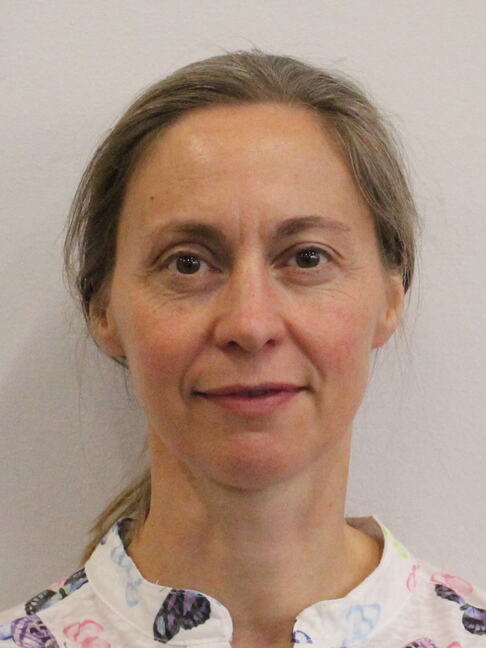
External participants
The core team will consist of two postdoctoral researchers and a research assistant, contributing to the project’s theoretical development and empirical work across all work packages.
CAMELOT brings together a focused research team and an international network of collaborators and advisors, combining expertise in climate science, governance, futures research, and policy.
Collaborating experts
CAMELOT collaborates with a small group of international experts who contribute to specific work packages, bringing complementary expertise in climate science, risk, and methodology.
Tim Lenton (University of Exeter, UK)
Lenton advises on Earth system tipping points, with a focus on AMOC, informing the design of experimental materials in WP2 and the policy engagement exercise in WP3. Tim contributes expertise in nonlinear climate dynamics and planetary-scale risk to support the integration of tipping point science into governance contexts.
Richard Wood (Met Office Hadley Centre, UK)
Wood advises on AMOC and large-scale climate variability, supporting the development of experimental materials in WP2 and the design of the engagement exercise in WP2. Richard contributes expertise in ocean–atmosphere processes to ensure scientific robustness in the project’s treatment of climate system risks.
Keith Smith (ETH Zürich, Switzerland)
Smith contributes methodological expertise to the design of experiments and surveys in WP2. Keith brings expertise in experimental and survey design, supporting the project’s empirical study of science-policy-society engagement methods.
Nico Wunderling (Goethe University, Germany)
Wunderling contributes to the design of the policy engagement exercise in WP3, with a focus on integrating computational modelling approaches. Nico brings expertise in tipping element dynamics and Earth system modelling to support scenario development and analysis.
Advisory board
The Advisory Board provides strategic guidance on the project’s conceptual development and its engagement with research and policy communities.
Cat Tully (School of International Futures, UK)
Tully provides strategic guidance on futures thinking and its application in policy and governance contexts. Cat brings expertise in long-term policy processes and international engagement on systemic risks.
Ed Finn (Arizona State University, USA)
Finn advises on the role of imagination, storytelling, and culture in shaping societal responses to future challenges. Ed brings expertise at the intersection of science, technology, and the humanities, with a focus on futures and narrative.
Laurie Laybourn (Strategic Climate Risks Initiative, UK)
Laybourn provides strategic input on climate risk, tipping points, and their implications for policy and governance. Laurie brings experience in bridging scientific insights and policy processes on systemic and cascading risks.