Created by potrace 1.11, written by Peter Selinger 2001-2013
NO
Search oslomet.no
  • About OsloMet
  • Study at OsloMet
  • Our research
  • Work for us
  • Alumni
  • University Library
  • Contact us
  1. OsloMet
  2. ...Intermediate levels are hidden
  3. Research projects
  4. Decoding digital media in African regions of conflict (DDMAC)

Decoding digital media in African regions of conflict (DDMAC)

The key goal of DDMAC is to gather empirical evidence defining and demonstrating the use, spread, content, and agenda-setting role of social media in regions of conflicts in sub- Saharan Africa.

Period
01.09.2021 – 31.12.2024
Funding
Norges forskningsråd
Project owner
  • Faculty of Social Sciences (SAM)
  • Department of Journalism and Media Studies
Project leader
  • Kristin Skare Orgeret
Project number
325123

Conflicts and insurgencies threaten to reverse development progress made in recent decades, not least in regions of sub-Saharan Africa. Digital communication is assumed to have a severe impact both on how conflicts develop and how they are being mediated, but there is a need for more empirical evidence on the role of digital media in regions of conflict.

Ethiopia and Mali have been selected as focal points of research as they represent two important regions of ongoing conflicts, namely the Horn of Africa and the Sahel. Experiences from Ethiopia and Mali could help illuminate our perceptions of digital media's role in ongoing conflicts. Concomitantly two very different countries, they are both historically tied to weak social contracts, have large diasporas, complex realities of inequalities and conflicts between polarized groups on ethnic lines. Through an ambitious interdisciplinary approach combining media and conflict studies, anthropology and computational social science, and a wide range of methodologies ranging from focus groups interviews, nethnographies, 'scraping' of a large amount of social media data, network analysis, media content tracking, and discourse analysis, the project will gain important new knowledge of citizens' social media use, how disinformation and hate speech spread through digital networks, the role of diasporas in conflicts, and the relationship between digital media and traditional media (radio) in regions with relatively low internet connectivity.

Project participants
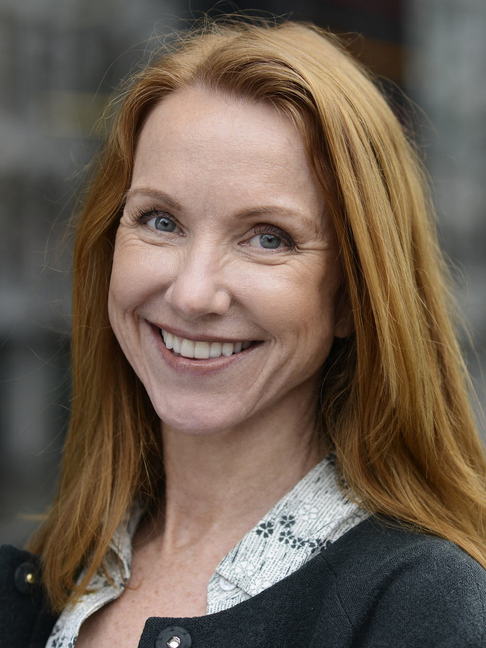
  • Kristin Skare Orgeret

    Kristin Skare Orgeret

    • Professor
    • +47 672 38 317

External participants

  • Mirjam de Bruijn, Professor, Leiden University
  • Bruce Mutsvairo, Associate Professor, Utrecht University
  • Mulatu Alemayahu Moges, Assistant Professor, Addis Ababa University
  • Modibo Galy Cissé, Voice 4Thought, Mali
  • Johannes Langguth, Research Scientist, Simula Research Laboratory
  • Daniel Thilo Schroeder, postdoctoral fellow, Simula Research Laboratory
Publisert: 19.10.2021Sist oppdatert: 19.10.2021

OSLO METROPOLITAN UNIVERSITY
STORBYUNIVERSITETET

P.O. Box 4, St. Olavs plass
NO-0130 Oslo
Norway
Tel.: +47 67 23 50 00

Contact us

  • Facebook
  • LinkedIn
  • Instagram
  • Norwegian
  • Accessibility statement
  • Cookies policy
  • Employee directory
  • Employee website
  • Student website
  • Upcoming events
  • Work for us
Kristin Skare Orgeret

Kristin Skare Orgeret

  • Professor
  • +47 672 38 317

More about the project

The project aims at establishing principles and processes to prevent, manage and resolve conflict in a sustainable manner and present them in a context-specific theory on digital media’s role in conflicts in African regions. The lack of communication between research in English and French, two of the largest lingua francas on the African continent, is surprising, and the project aims to bridge the gap between the two research traditions, while also including local languages.

Primary objectives

The primary objectives of the DDMAC project are:

  • Gather empirical evidence defining and demonstrating the use, spread, content and agenda setting role of social media in regions of conflicts in sub-Saharan Africa.
  • Identify the mechanisms through which disinformation and hate speech spread in social media in regions of conflict, both within and beyond local and regional constituencies.
  • Drawing on this data, develop a new theoretical model for ‘African digital democracies’ including principles and practices, which may prevent, manage and resolve intractable conflicts