Created by potrace 1.11, written by Peter Selinger 2001-2013
NO
Search oslomet.no
  • About OsloMet
  • Study at OsloMet
  • Our research
  • Work for us
  • Alumni
  • University Library
  • Contact us
  1. OsloMet
  2. ...Intermediate levels are hidden
  3. Research projects
  4. Edible Cities Network: Integrating Edible City Solutions for social resilient and sustainably productive cities

Edible Cities Network: Integrating Edible City Solutions for social resilient and sustainably productive cities

The Edible Cities Network (EdiCitNet) works towards making cities around the world better places to live through the implementation and institutional integration of Edible City Solutions.
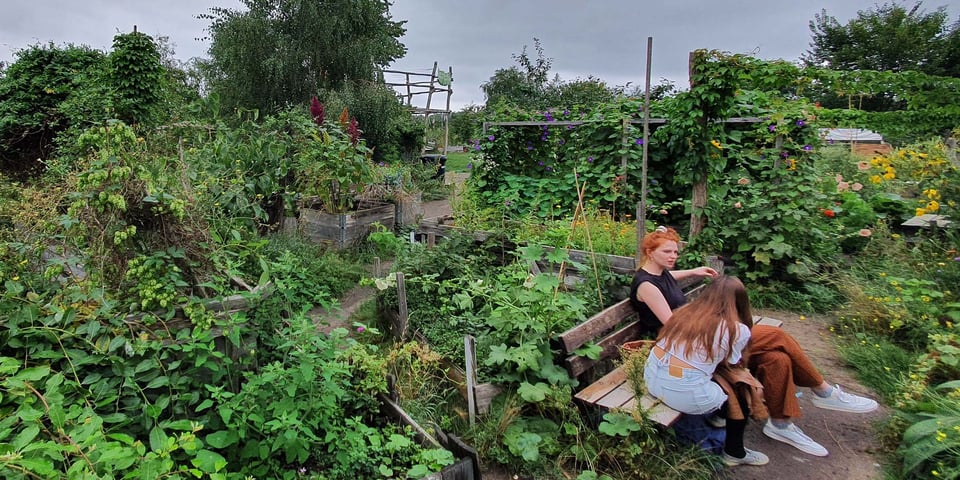
To kvinner på en benk i en hage
Period
01.09.2018 – 31.08.2023
Funding
EUs Horisont 2020
Project owner
  • Work Research Institute (AFI)
Project leader
  • Kristin Reichborn-Kjennerud
Project number
201020

Edible City Solutions (ECS) are all forms of sustainable urban food production, distribution and use – from neighbourhood gardens, to urban beekeeping and sheep farming, green facades or high-tech indoor farming, cooking and dining events and the use of locally grown urban food in restaurants.  

Our aims

The Edible City Solutions Project aims to:

  • make cities healthier, greener and more livable
  • create new green businesses and jobs,
  • and empower local communities to overcome social problems.

An innovation action

Food is not only a popular topic of conversation – it is shared by everyone and connects us all. The Edible Cities Network is not a regular research project, it’s an innovation action funded by the European Commission (EASME).

That means we are working under real world conditions with real people, real challenges and real solutions. We are testing, demonstrating, piloting and transferring ECS in close cooperation with local people from the very beginning of the process, working together with them to improve life in their cities. 

The inclusive and participatory dynamics inherent in ECS engender both local economic growth and social cohesion by empowering communities to strengthen social ties through communal events. We also strive to create new green businesses and job opportunities revolving around urban food production, distribution and use.

The systemic use of urban landscapes for food production is a major step towards more sustainable, livable and healthier cities.

EdiCitNet is a project funded by the European Union’s Horizon 2020 research and innovation programme under grant agreement No. 776665.
  • Visit EdiCitNet's website

Project participants

  • Kristin Reichborn-Kjennerud

    Kristin Reichborn-Kjennerud

    • Research Professor
    • +47 672 38 096

Research groups

  • Innovation and Enterprise Development
Publisert: 02.03.2020Sist oppdatert: 09.08.2023

OSLO METROPOLITAN UNIVERSITY
STORBYUNIVERSITETET

P.O. Box 4, St. Olavs plass
NO-0130 Oslo
Norway
Tel.: +47 67 23 50 00

Contact us

  • Facebook
  • LinkedIn
  • Instagram
  • Norwegian
  • Accessibility statement
  • Cookies policy
  • Employee directory
  • Employee website
  • Student website
  • Upcoming events
  • Work for us

Project partners

Coordinator

Humboldt-Universitaet Zu Berlin, Germany

Partners

  • Gemeente Rotterdam, Netherlands
  • Stadt Andernach, Germany
  • Internationale Bauausstellung Heidelberg GmbH, Germany
  • Senatsverwaltung Fuer Stadtentwicklung Und Wohnen, Germany
  • Ajuntament De Sant Feliu De Llobregat, Spain
  • Letchworth Garden City Heritage Foundation (Letchworth Gchf), United Kingdom
  • Obcina Sempeter-Vrtojba (Sempeter), Slovenia
  • Commune De Carthage (Carthage), Tunisia
  • Ville De Lome (Lomé), Togo
  • Ministerio De Educacion Y Cultura (Montevideo Mec), Uruguay
  • Deutscher Dachgartner Verband e.V. (Ddv), Germany
  • Brighton & Hove Food Partnership Ltd (Bhfp), United Kingdom
  • Fundacio Solidaritat Ub (Fsub), Spain
  • Transition Oststeiermark - Gemeinschaften Nachhaltig Gestalten (To), Austria
  • Unite Technique Du Semide Geie (Ut Semide), France
  • Association Tunisienne De Developpement Durable: La Recherche En Action (React), Tunisia
  • Hidrolab, Projektiranje In Inzeniring Doo (Hidrolab), Slovenia
  • Terra Concordia Gemeinnützige UG (Haftungsbeschränkt) (Mundraub), Berlin, Germany
  • Gallis Helene (Nabolagshager), Oslo
  • Nolde Erwin (Nolde & Partner), Berlin, Germany
  • University Of Brighton (UoB), Brighton, United Kingdom
  • Univerza V Ljubljani (UL), Ljubljana Slovenia
  • Universität Für Bodenkultur Wien (BOKU), Wien, Austria
  • Universitat De Girona (UDG), Spain
  • Wageningen University (WU), Netherlands
  • OsloMet - storbyuniversitetet (OsloMet), Norway
  • Fundacio Institut Catala De Recerca De L'aigua (ICRA), Girona, Spain
  • Nibio - Norsk Institutt For Bioøkonomi (NIBIO), Norway
  • Royal Melbourne Institute Of Technology Spain Sl (RMIT Europe), Barcelona, Spain
  • Peking University (PKU), Beijing, China

Publications

Plassnig, Pettit, Reichborn-Kjennerud, Säumel. 2022. Successful scaling of Edible City Solutions to promote food citizenship and sustainability in food system transitions (frontiersin.org). Frontiers in Sustainable Cities, Volume 4 - 2022.

Our YouTube channel

Edible Cities Network on Youtube (youtube.com).