Created by potrace 1.11, written by Peter Selinger 2001-2013
NO
Search oslomet.no
  • About OsloMet
  • Study at OsloMet
  • Our research
  • Work for us
  • Alumni
  • University Library
  • Contact us
  1. OsloMet
  2. ...Intermediate levels are hidden
  3. Research projects
  4. Peopleless offices – The role and flows of information in digital workplaces

Peopleless offices – The role and flows of information in digital workplaces

This research seeks to advance knowledge on what happens to information-related practices when the physical setting of a workplace loses its primacy and work is instead carried out in an elusive digital workplace.

Period
30.03.2020 – 30.03.2025
Project owner
  • Faculty of Social Sciences (SAM)
  • Department of Archivistics, Library and Information Science
Project leader
  • Katriina Byström

Peopleless offices refer to workplaces that entirely or mainly exist in digital rather than physical spaces. Instead of sharing an office with others working for the same employer, people are working alone from their homes or together with others who work for different employers. The idea of paperless offices and electronic cottages by Alvin Toffler is pushed a step further by challenging the traditional view on a workplace.

Uninhibited offices became suddenly a reality as many workplaces temporarily closed down to hinder the spreading of the COVID-19 Pandemic. Consequently, their entire workforce started to collectively carry out their work in joint digital workplaces, instead of the physical ones. This fundamentally changes the conditions for working after over 200 years of literally “going to work” as a norm since the Industrial Revolution.

The aim of this project is to elicit how information practices are changing when employees temporarily carry out their work in a workplace that is only available digitally. The availability of information systems via diverse mobile technologies, and at similar levels of functionality, has made the transition from a physical to a digital environment technically possible. However, all interactions involving information and knowledge are not accomplished in such systems. When the physical attribute of a workplace loses its primacy, the established flows of information and knowledge outside technically aided systems are disturbed. This project explores what kinds of impacts the transition can have on information practises at work.
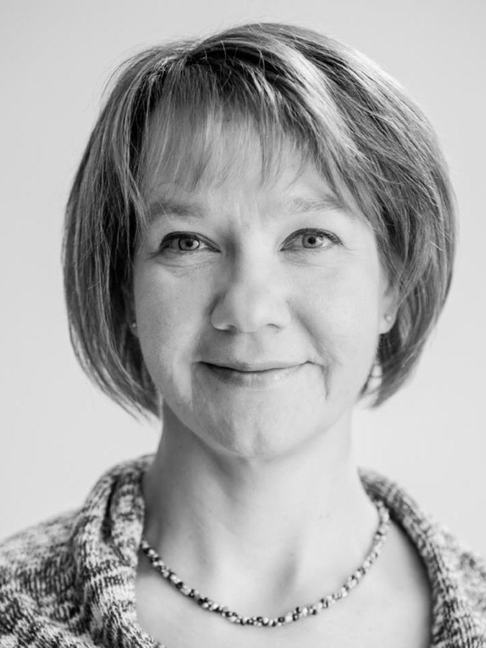
Project participants

  • Katriina Byström

    Katriina Byström

    • Professor
    • +47 672 38 036

Research groups

  • Information Systems based on Metadata (METAINFO)
Publisert: 14.04.2020Sist oppdatert: 18.09.2020

OSLO METROPOLITAN UNIVERSITY
STORBYUNIVERSITETET

P.O. Box 4, St. Olavs plass
NO-0130 Oslo
Norway
Tel.: +47 67 23 50 00

Contact us

  • Facebook
  • LinkedIn
  • Instagram
  • Norwegian
  • Accessibility statement
  • Cookies policy
  • Employee directory
  • Employee website
  • Student website
  • Upcoming events
  • Work for us

Research aim and questions

In the present project, the understanding of which information practices surface and are re-negotiated when working temporarily only in digitally available office is explored through following research questions:

  • how information interactions are revised, if at all?
  • which information interactions are abandoned and why?
  • which new information interactions evolve and why?

Research methods

The perspective applied is the workers’ point of view and the theoretical backdrop is a form of a structuration theory-remix that relies on sociotechnical/social informatics approaches, workplace learning/practice theories, and activity theory/participatory design. The methodological approach is qualitative, employing interviews and self-reporting as data-collection methods. The participants consist of employees who carry out their work mainly in a digital workplace, instead of a physical one.