Created by potrace 1.11, written by Peter Selinger 2001-2013
NO
Search oslomet.no
  • About OsloMet
  • Study at OsloMet
  • Our research
  • Work for us
  • Alumni
  • University Library
  • Contact us
  1. OsloMet
  2. ...Intermediate levels are hidden
  3. Research projects
  4. Sustainable European Welfare Societies

Sustainable European Welfare Societies

How can researchers and policymakers approach issues of welfare state and environmental sustainability in mutually supportive ways across policy fields?

Period
01.10.2014 – 31.12.2018
Funding
Norges forskningsråd
Project owner
  • NOVA – Norwegian Social Research
Project leader
  • Bjørn Hvinden
Project number
414009

Welfare state reform is on the political agenda in most European countries. Reforms are seen as necessary to set welfare states on a sustainable path. Yet, policymakers and analysts rarely specify fully what such sustainability entails. We usually hear that population ageing puts pressure on welfare states and social protection systems. At the same time, even though the impact of climate change on human lives and society is growing, few researchers have examined the likely implications of climate and environmental changes for the future of welfare states.

To start to fill this gap, the project asks how researchers and policymakers can approach issues of welfare state and environmental sustainability in mutually supportive ways across policy fields. A gender-balanced team of international researchers with complementary fields of expertise is responsible for the project. The composition of the team allows the main research question to be explored through a comparative lens and from different angles using both quantitative and qualitative methods.

The overall objectives of the project aim to contribute to the achievement of Sustainable Development Goals within no poverty, industry, innovation and infrastructure, decent work and economic growth, reduced inequalities, sustainable cities and communities, responsible consumption and production, climate action, and partnership.

See the list of publications from the project (forskningsradet.no).
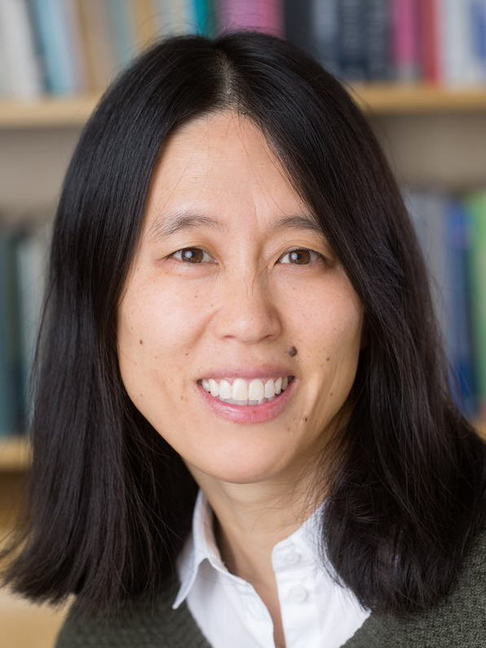
Project participants

  • Mi Ah Schøyen

    Mi Ah Schøyen

    • Research Professor
    • +47 672 38 408

Research groups

  • Health and Welfare Studies

Featured research

  • Norwegian oil platform "Statfjord A".
    • Working life, society and welfare

    Providing for the future: to use or not to use Norway’s oil and gas

    How did a desire to preserve oil and gas for future generations and protect the environment turn into the largest sovereign wealth fund in the world and the foundation of the Norwegian welfare state?

Publisert: 16.12.2019Sist oppdatert: 27.01.2023

OSLO METROPOLITAN UNIVERSITY
STORBYUNIVERSITETET

P.O. Box 4, St. Olavs plass
NO-0130 Oslo
Norway
Tel.: +47 67 23 50 00

Contact us

  • Facebook
  • LinkedIn
  • Instagram
  • Norwegian
  • Accessibility statement
  • Cookies policy
  • Employee directory
  • Employee website
  • Student website
  • Upcoming events
  • Work for us

Work packages

  1. WP1 asks how the meaning of sustainable social welfare changes if we consider environmental concerns, employing as a starting point the literature on sustainable development.
  2. WP2 examines, using international survey data, the trends in individual attitudes towards issues related to the provision of welfare and the environment and asks whether we can detect cross-national convergence or divergence.
  3. WP3 explores, based on a comparison of four country cases (NOR, GER, ITA, UK), what salience and meaning environmental and welfare state sustainability have across three key government departments (social affairs, finance and environment).
  4. WP4 synthesises the findings from WPs 1–3 to draw some general conclusions regarding the project's overall question. The aim is to clarify how both research and policy can deal with cross-cutting issues of sustainability.

Participants at OsloMet

  • Bjørn Hvinden
  • Marianne Takle

Partner institutions

  • Cicero – Center for International Climate Research
  • Vienna Institute of Demography
  • Austrian Academy of Science
  • Lunds University, Socialhøgskolan
  • Universita di Milano