Created by potrace 1.11, written by Peter Selinger 2001-2013
NO
Search oslomet.no
  • About OsloMet
  • Study at OsloMet
  • Our research
  • Work for us
  • Alumni
  • University Library
  • Contact us
  1. OsloMet
  2. ...Intermediate levels are hidden
  3. Research projects
  4. YouHope: Practicing hope

YouHope: Practicing hope

In YouHope we will challenge myths and stereotypes of integration issues concerning youth citizens in super-diverse urban communities.

Period
01.01.2025 – 31.12.2027
Funding
NordForsk
Project owner
  • Work Research Institute (AFI)
Project leader
  • Aina Landsverk Hagen
Project number
203766

Young people predominantly live in cities, where the urgency of social exclusion is intertwined with numerous other societal challenges. Many of these pressing and interconnected problems, like unemployment, poverty, crime, and gender-based, ethnic, and religious discrimination, affect youth.

Integration and social inclusion are often put forth as the “holy grail” that will solve the perceived “problem” of “too much” immigration in Nordic societies – where immigration is represented to be a key factor causing or amplifying these other social issues and young people with migrant backgrounds are stigmatized as a hopeless group that strains the social fabric.

In YouHope we will turn the tide, by looking at the arenas and practices where they collectively engage in hopeful practices.

Project participants
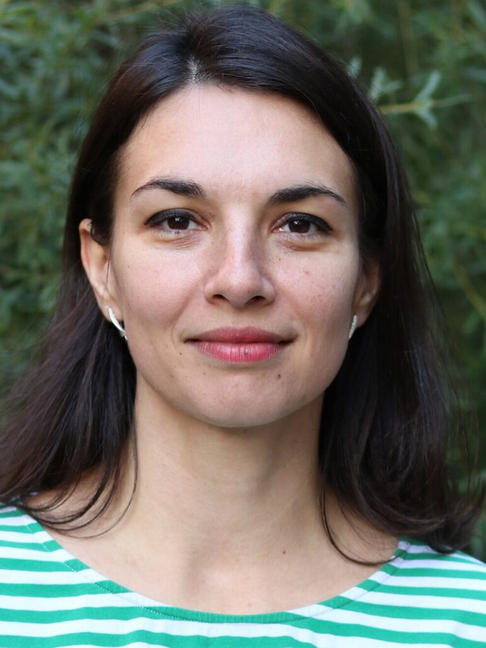
  • Daniele Evelin Alves

    Daniele Evelin Alves

    • Senior Researcher
    • +47 672 35 749
  • Aina Landsverk Hagen

    Aina Landsverk Hagen

    • Research Professor
    • +47 672 37 662
  • Hilde Rønnaug Kitterød

    Hilde Rønnaug Kitterød

    • PhD Candidate
    • +47 672 38 899
  • Patrick Kollman

    Patrick Kollman

    • PhD Candidate
    • +47 672 37 498
  • Sara Berge Lorenzen

    Sara Berge Lorenzen

    • Project Adviser
    • +47 672 35 604

External participants

  • Jacob Lind and Anne Harju, Malmö University
  • Ditte Tofteng and Rasmus Præstmann Hansen, University College Copenhagen

Research groups

  • Innovation and Enterprise Development
Publisert: 21.01.2025Sist oppdatert: 07.05.2025

OSLO METROPOLITAN UNIVERSITY
STORBYUNIVERSITETET

P.O. Box 4, St. Olavs plass
NO-0130 Oslo
Norway
Tel.: +47 67 23 50 00

Contact us

  • Facebook
  • LinkedIn
  • Instagram
  • Norwegian
  • Accessibility statement
  • Cookies policy
  • Employee directory
  • Employee website
  • Student website
  • Upcoming events
  • Work for us

Media coverage in English

Research on hope gives young people with minority and migration backgrounds a stronger voice (Nordforsk.org)

More about the project

We will do this by conducting a media study on how youth in the Nordic countries are perceived or portrayed as either hopeless or hopeful

Furthermore, we will engage and train young peer-researchers to collaborate on multi-sited ethnographic network studies of how youth are practicing and enacting hope in super-diverse neighborhoods in the Nordic cities Oslo, Malmö and Copenhagen.

The aim is to develop a nuanced vocabulary of hope from the perspective of the youth, and disseminate the results through short films, scientific exhibitions and policy briefs presented at a Youth Summit with Nordic stakeholders.

The transdisciplinary cross-national team of researchers with diverse background in social sciences and arts and humanities will use this new peer-researched knowledge to engage youth and stakeholders into an intergenerational and equalizing cross-national dialogue on how to design more innovative and targeted policies for integration that resonates with the Nordic model.

We view hope as not merely goal-attainment through individual thinking, but as relational possibilities, open-ended processes and generative practices that plays out in everyday situated life that contribute to wellbeing.

The acts of practicing hope are thus both collective, contextual and temporal, and consequently there is a need to investigate this phenomenon through ethnographic, participatory and arts-based, participatory visual methods where we make room for young people’s voices to be heard in a radical way, through peer-research and film-elicitation.