Created by potrace 1.11, written by Peter Selinger 2001-2013
NO
Search oslomet.no
  • About OsloMet
  • Study at OsloMet
  • Our research
  • Work for us
  • Alumni
  • University Library
  • Contact us
  1. OsloMet
  2. ...Intermediate levels are hidden
  3. Faculty of Technology, Art and Design (TKD)
  4. Department of Computer Science

Department of Computer Science

The department offers higher education in computer science and information technology, and has extensive research and development activity.

Study programmesResearch and developmentEmployees
  • Portait of Claire, Kyle and Sami by Pilestredet street in Oslo. OsloMet builing in the background.
    • Technology and design

    How students from a small Louisiana town experience Oslo

    After two months in Oslo, three students from Louisiana Tech University share their experiences with studying, Norwegian culture, and life in a larger city.

  • Portrait of Leila Mozaffari
    • Technology and design

    Where students become entrepreneurs

    Gründergarasjen at OsloMet provides a unique environment where engineering and computer science students can transform their ideas into real start-ups.

  • Group photo of the four EPS students outdoors at one of the buildings at OsloMet.
    • Technology and design

    EPS project: Focus on the process, rather than the end result

    This European Project Semester (EPS) group will teach students fluid dynamics with a user-friendly wind tunnel.

  • Portrait of elderly lady in bed.
    • Health and social work
    • Information systems and technology

    Using artificial intelligence to detect and fight dementia

    Dementia affects millions of people each year. It’s a problem that most of us will encounter in our lives and it does not yet have any cure or even effective early detection methods.

  • Hands holding test tubes under microscope.
    • Health and social work
    • Information systems and technology

    How artificial intelligence can revolutionise assisted fertilisation

    AI could make assisted reproductive technology significantly more effective, but professionals are often sceptical. There is a need to build greater trust among them, says researcher.
OSLO METROPOLITAN UNIVERSITY
STORBYUNIVERSITETET

P.O. Box 4, St. Olavs plass
NO-0130 Oslo
Norway
Tel.: +47 67 23 50 00

Contact us

  • Facebook
  • LinkedIn
  • Instagram
  • Norwegian
  • Accessibility statement
  • Cookies policy
  • Employee directory
  • Employee website
  • Student website
  • Upcoming events
  • Work for us

Students

1705

2026 (Database for Statistics on Higher Education)

Employees

79

FTEs in 2026 (Database for Statistics on Higher Education)

Bachelor's programmes

4

plus European Project Semester, a one-year study programme, a foundation course and a three-semester version of engineering studies

Master's programme

1

Eight specialisations in the Master's degree program Applied Computer and Information Technology (MSc)

Organisation

Head of Department

  • André Brodtkorb

    André Brodtkorb

    • Head of Department, professor
    • +47 672 35 924

Academic groups

  • Cloud computing, Cybersecurity and Software Engineering (Head: Boning Feng)
  • Mathematical Modelling (Head: Siri Fagernes)
  • Artificial intelligence (Head: Biplab Kumar Datta)
  • Human-Computer Interaction and Universal Design of ICT (Head: Siri Fagernes)
  • Innovation, Digital Transformation and Sustainability (Head: Ellen Sethov)

Addresses

The department is located in Pilestredet 35 (P35) in Oslo, parts of the department is in Stensberggata 29 (SG29).

Telephone, postal address and invoice address.

External collaboration

The Department of Computer Science at the Faculty of Technology, Art and Design combine cutting-edge science with strong industrial links. 

The Department has extensive collaboration with partners from the IT industry, in order to ensure the relevance of our educational programmes and R&D activities to the industry and to society. 

Bachelor's and master's theses

The Department collaborates extensively with industry and organizations to provide our students with relevant projects for their Bachelor's and Master's theses. 

The projects are based on real-life challenges, and we make sure that the students get to use the skills and knowledge they have acquired throughout their studies.

The projects are a key stepping stone in preparing students for the workplace, and provides them with a unique insight into their future work  and work environment.

The Department ensures that the students receive academic supervision throughout their project period. 

The Department organizes Relevance Seminars every year. Partners and contacts from the industry are invited to discuss and suggest potential changes to our educational programmes, in order to keep the programmes relevant for the industry.

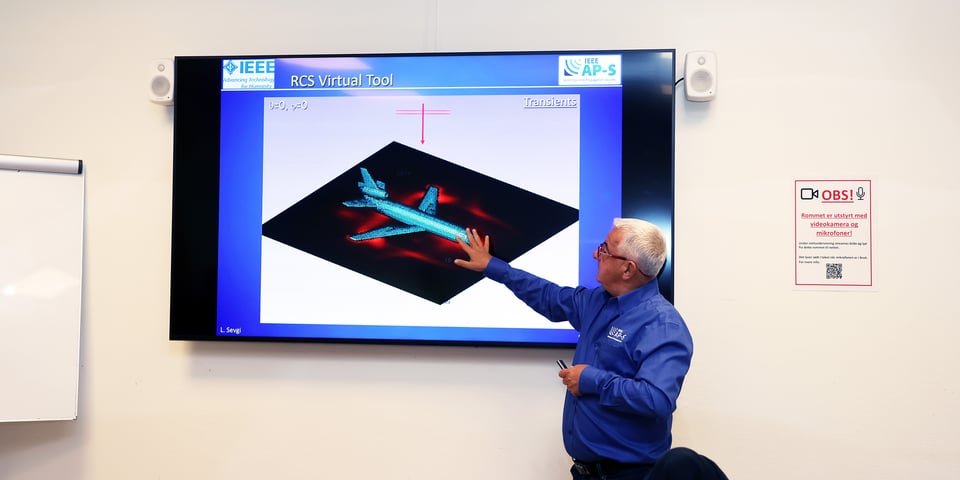
Levent Sevgi shows a picture of an airplane.

How we can get more out of future mobile networks

What could AI, new antenna systems and a better understanding of electromagnetic waves mean for the future of communications? Three leading international experts presented current research at OsloMet.

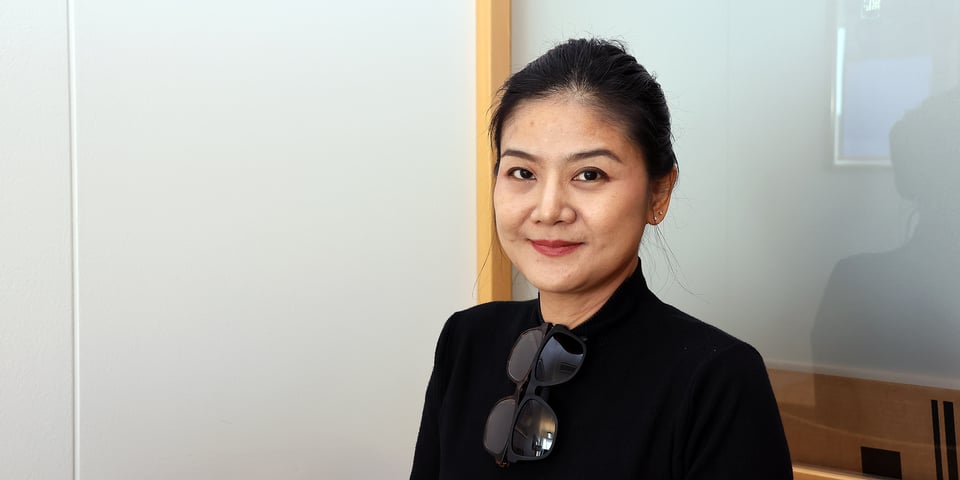
Portrait of Wanwisa Wannapipat

Good digital design should work for everyone

Visiting researcher Wanwisa Wannapipat from Thailand is spending time at OsloMet to explore universal design, digital learning and how technology can better serve older people and other users with different needs.

Barley salad in small, transparent boxes.

A calculator can provide more keyhole-labelled foods

A new nutrition calculator can make it easier for food producers to label their products with the Norwegian Keyhole mark. As a result, more food items can be Keyhole-labelled.