Using nanomedicine to help solve the antibiotic resistance crisis
Antibiotic resistance is creating serious challenges worldwide. A tiny fat bubble containing antibiotics could be part of the solution, hopes OsloMet researcher Sanko Nguyen.
Kort oppsummert
- Antibiotic resistance is making infections increasingly difficult to treat. Researchers at OsloMet are therefore developing new types of antibiotics using nanomedicine.
- The researchers encapsulate antibiotics in tiny lipid particles that protect the active substance and help it reach bacteria more effectively.
- Initial tests are promising, and the researchers are now exploring how both nanotechnology and artificial intelligence can contribute to improved treatments against resistant bacteria.
This summary was created with the help of Copilot and quality-assured by OsloMet.
Infections that can no longer be treated due to antibiotic resistance represent a major societal challenge.
Common infections such as pneumonia may become difficult, or even impossible, to treat, and studies show that the number of deaths caused by antibiotic resistance is expected to increase dramatically by 2050.
A race against time
“It is a race against time to find new, effective antibiotics. Bacteria have developed tolerance to many of the antibiotics currently available to us,” says Nguyen.
“As quickly as bacteria develop resistance, there is a great need to create new antibiotics that are difficult for bacteria to become resistant to.”
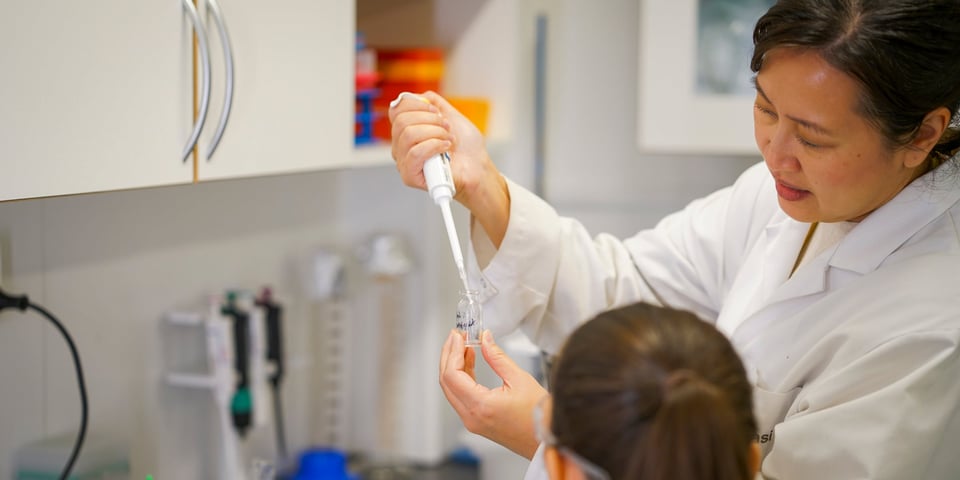
Nguyen specializes in how nanotechnology can be used to improve the formulation and delivery of medicines (see fact box).
Bacteriocins: A new type of antibiotic
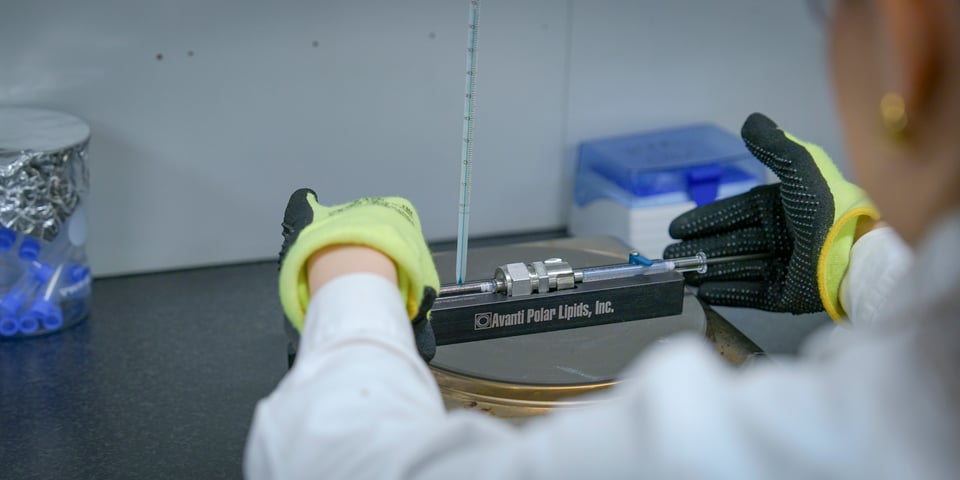
Together with fellow OsloMet researchers and students in the project Smart Development of Nano-Antibiotics, Nguyen is investigating how nanotechnology can enable the use of so-called bacteriocins as antibiotics.
Bacteriocins are small peptides, or short chains of amino acids, that have proven highly effective at killing antibiotic-resistant bacteria in laboratory experiments, even in very small quantities.
“If we can reduce the dose while achieving the same effect, we do not need to use as much antibiotic,” says Nguyen.
The challenge is that bacteriocins break down easily, making them difficult to use as pharmaceuticals. This is where nanotechnology opens up new possibilities.
Tiny particles with new properties
“The advantage of formulating medicines as nanomedicine is that the small particles give the drug new properties. This allows us to make better use of it while also reducing side effects,” says Nguyen.
The advantage of formulating medicines as nanomedicine is that the small particles give the drug new properties. This allows us to make better use of it while also reducing side effects.
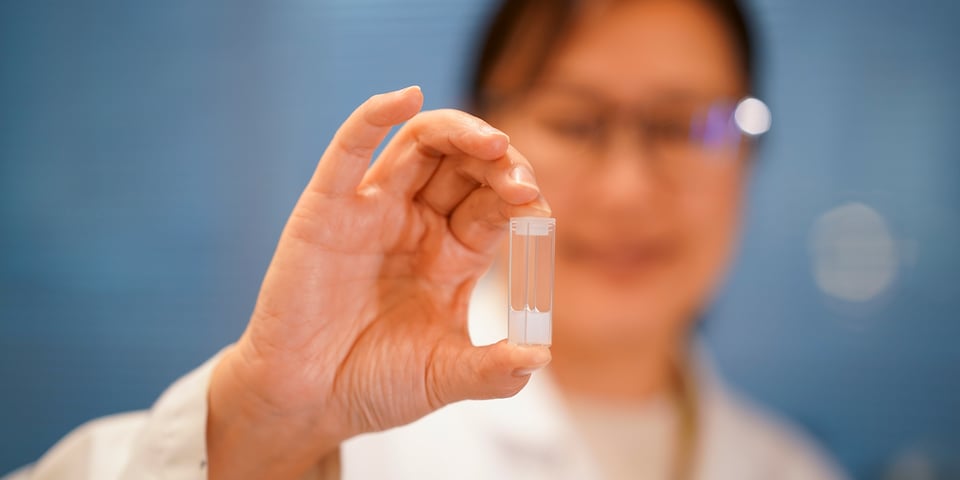
Although nanoparticles are too small to be seen with the naked eye, they can protect a drug from degradation inside the body. The particles can then be absorbed and act as carriers, transporting the medicine directly to the site of infection.
Curing antibiotics of their “fear of water”
The bacteriocins Nguyen’s team is working with are hydrophobic, meaning they repel water or have a kind of “fear of water.” This creates challenges when developing them into medicines.
“For the body to benefit from a drug, it must be able to dissolve in water.”
To overcome this problem, the team has encapsulated the antibiotics in nanoparticles that eliminate this “fear of water” while protecting the active substance from degradation in the body. As a result, the bacteriocins can be taken up by bacteria and kill them effectively.
Fat bubbles filled with antibiotics kill bacteria
However, the challenges do not end there. In the fight against resistant bacteria, biofilms are another major problem. A biofilm is a complex community of bacteria and other substances that often forms in surface wounds, for example around intravenous catheters and other medical devices used in hospitals.
The biofilm forms a protective shield around bacteria, preventing wounds from healing and making it difficult for antibiotics to penetrate bacterial cells.
“Biofilm-associated infections are extremely difficult to treat with antibiotics because they have developed increased tolerance to them,” says the researcher.
Researchers at OsloMet discovered that they could use lipid structures called liposomes to encapsulate the antibiotics. This appears to be an effective way of penetrating the protective barrier.
“We have used nanotechnology to create a kind of fat bubble with antibiotics inside. The lipids have properties that allow them to fuse with bacterial membranes, enabling the antibiotics to enter the bacterial cells themselves.”
Testing a nano-gel on pig skin
Although the laboratory results are promising, significant work remains before the technology can be used as a medicine.
“Most nanomedicine-based products are liquid, but for superficial wounds a semi-solid formulation such as a cream, ointment, or gel is often more suitable,” says Nguyen.
The researchers have tested all three formulations, and so far the gel has produced the best results.
They have also tested the antibacterial nano-gel on infected pig skin, but standardizing the experiments to obtain reliable results has proven challenging.
“The fat layer in the skin samples varies somewhat in thickness, which can affect how well the gel penetrates. The way we create the infection on the skin and apply the gel may also influence the results. There are still many factors we need to investigate, but the findings are very exciting.”
The researchers have also begun exploring how artificial intelligence can be used to improve these medicines and plan to investigate this further.
“Training these models requires a great deal of data, and obtaining sufficiently high-quality data has been difficult. But we are only at the beginning, and I believe the potential is enormous.”
References
Naghavi M, et al. Global burden of bacterial antimicrobial resistance 1990–2021: a systematic analysis with forecasts to 2050 (thelancet.com). The Lancet. 2024; 404 (10459): 1199-226.
Amer et al. Phospholipid acyl chain length modulation: a strategy to enhance liposomal drug delivery of the hydrophobic bacteriocin Micrococcin P1 to biofilms (sciencedirect.com). Eur J Pharm Sci 211 (2025) 107149.
Amer et al. The impact of surface charge on the interaction of cholesterol-free fusogenic liposomes with planktonic microbial cells and biofilms (sciencedirect.com). Int J Pharm 669 (2025) 125088.