Five things internationals working in Norway think you should know before moving here
Are you considering applying for a PhD or academic position at a Norwegian university? We asked the experts—our own international employees—for their advice on how to navigate the transition to working in Norway.
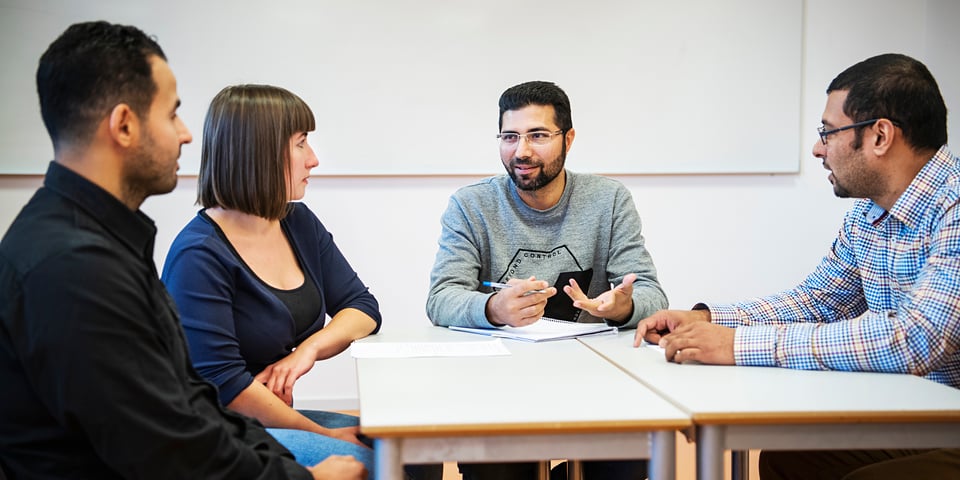
In putting together this piece, we checked in with OsloMet employees working as professors, post-docs, PhD candidates and in administrative roles. Between them, our sources represent more than a dozen countries.
Working in Norway is easier to combine with having a family—and spending time with them.
The advice we got broke pretty neatly down into five categories. Are you curious what our international experts told us? Read on.
Your stress levels are going to go down
Academia in Norway is not as cutthroat as in most other countries. There are two main reasons for this.
Flat organisational structure
Working life in Norway is characterised by flat organisational structures and a relatively short distance between the people in management roles and other members of the department or team. Not everyone is equal exactly, but hierarchies are less pronounced than in other societies.
Several OsloMet employees noted that this creates a climate where they are free to express their opinions, float new ideas, or give critical feedback. As one PhD candidate puts it: "People are properly valued, and their work is properly recognised."
Norwegians take work-life balance seriously
Work-life balance in Norway is sacred—even in academia. Your supervisor will make sure you take your five weeks of holiday. And you will probably be surprised at how quickly the office empties out on Friday afternoons. Many newcomers are surprised at how seriously Norwegians take their work-life balance. It won’t take many years of living in Norway before you will too.
Norway is a great country to raise a family in
Whether you are planning to move with your family, or you are hoping to have a family someday, Norway is in a league of its own when it comes to being family-friendly. Here are just a few of the benefits families enjoy in Norway:
- free public schools that more than 95% of children in Norway attend
- tuition-free universities
- subsidised, high-quality childcare—in Oslo, the maximum price for a kindergarten place is less than 300 Euros per month.
- ten months of paid parental leave that parents can divide as they see fit and take at a time that makes sense for their family
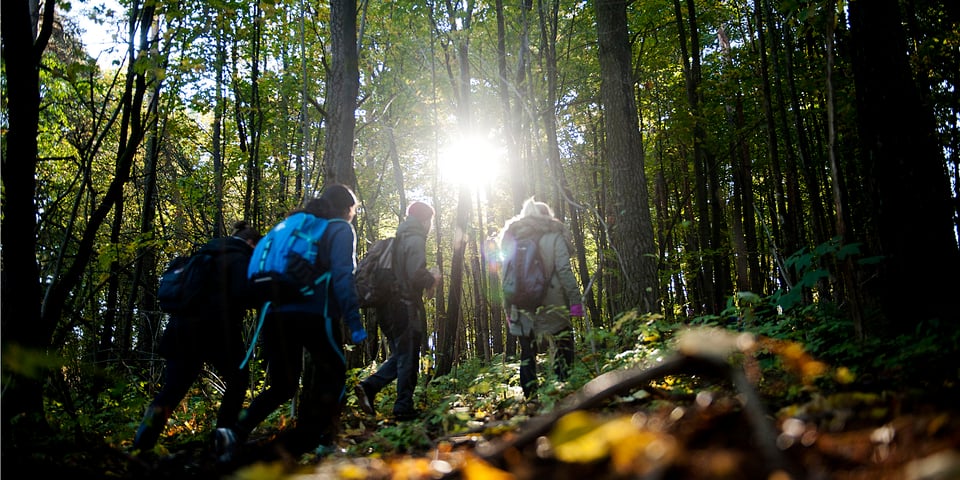
In Oslo you have easy access to nature, beautiful woods, lakes, and mountains.
In addition, Oslo is one of the safest capitals in Europe and boasts a comprehensive public transportation network. Most children walk or bike to elementary and middle school and take public transit to high school.
As a parent of children in Oslo, in other words, you don’t need to worry about spending hours a day stuck in traffic jams between work, home, school and after-school activities.
Everyone speaks English, but you should still learn Norwegian
There are few, if any, places in the world where the locals are more fluent in English than here in Norway. There is a wealth of information about Norway and the practicalities of moving here available in English online. Almost everyone you meet here will be able to answer your questions and give you advice in confident, understandable English.
English is the de-facto second official language of Norwegian academia, and you will be able to engage in academic discussions with your new colleagues from your first day in the job. OsloMet takes the needs of its international employees seriously—all information published on the employee website as well as all other internal communications includes English and Norwegian versions.
You can have a successful career and a good life in Norway speaking and writing in English. But you should still strongly consider learning Norwegian.
Why? There are at least two good reasons:
- You’ll expand your career opportunities. Whether you have your sights set on becoming a head of department one day or moving to a new role at another university or research centre, you’ll have an easier time advancing your career if you know Norwegian.
- You’ll enjoy life here more. Even though Norwegians sound almost native when they speak English, they watch TV, read the news, discuss the meaning of life and the issues of the day in their mother tongue. Acquiring a command of the local language will help you get to know the people you work with and meet in the course of your daily life here better. And as banal as it might sound, the more Norwegian you learn, the more Norwegian society will start to make sense to you.
Are you interested in trying your hand at Norwegian? There are regular courses available to new employees, as well as a language tandem programme that pairs employees learning Norwegian with those who want to learn another language.
Even though we know our language sounds quite exotic, it’s actually quite closely related to English. The combination of a Norwegian course, the right attitude and a little patience will have you speaking, writing and reading Norwegian in less time than you might expect.
Oslo is green, blue and all the other colours under the rainbow
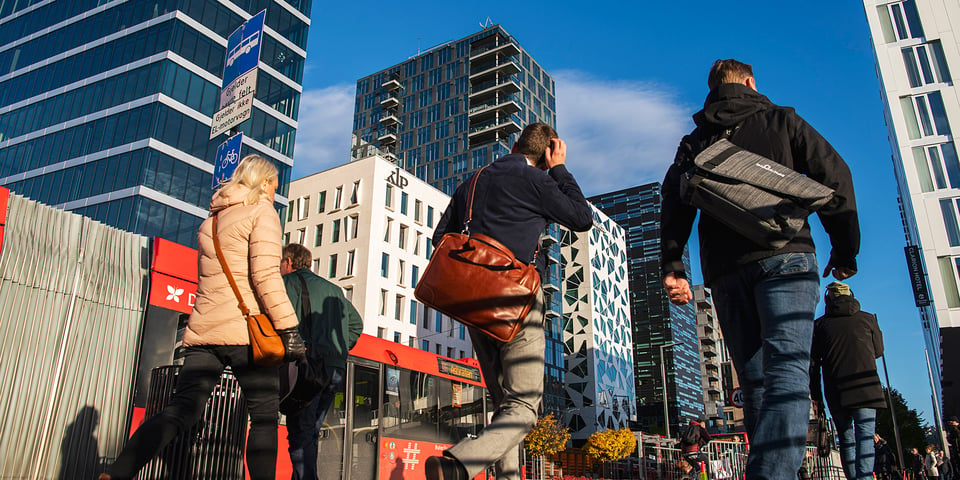
Norway’s capital and largest city, Oslo, has a great deal to offer international transplants. Home to about 700,000 residents, Oslo is manageable in size, while still managing to be "cosmopolitan," "trendy" and "dynamic," according to our international colleagues.
The city hosts approximately 5,000 concerts annually—more concerts per capita than any other city in Europe—and attracts more live music acts than Copenhagen and Stockholm combined. In addition to culture, two other qualities set Oslo apart from other cities.
We have nature at our doorstep
Home to dozens of parks and immediately surrounded by expansive forests, lakes, mountains and the Oslo Fjord, pristine Norwegian nature is part of Oslo’s DNA. All those trees keep the air clean, while the low levels of pollution mean the water is safe and refreshing to swim in.
I’ve learned to appreciate nice weather.
Outdoors enthusiasts love Oslo because there are so many trails to hike and cross-country ski. Those of us who moved here from another city less connected to the natural world, meanwhile, have come to appreciate the positive health benefits of getting out into the forest or going for a bike ride or a swim.
Oslo is both green in a literal sense and in other ways. Various measures designed to limit the city’s carbon footprint and preserve clean air and water have earned Oslo the title of European Green Capital for the year 2019. These measures include:
- a comprehensive, reliable and affordable public transit system
- a growing and user-friendly network of bike lanes and bike paths all across the city.
Oslo is diverse
While immigrants and their children comprise 17% of the population of Norway, the figure in Oslo is nearly twice that. With every third person in the city having some kind of connection to another country, Oslo is tolerant and welcoming.
This diversity extends to the culinary scene, which includes restaurants representing some of the largest immigrant groups in the city—Poles, Pakistanis, Vietnamese and Americans—as well as many of the smaller ones. Many visitors to our city are surprised by how diverse Oslo is. We like it that way, and most people who live here do too.
Oslo offers the advantages of a big city without being very chaotic by European standards.
Oslo is a tolerant city in other ways. Home to the largest LGBT community in Norway, international employees of different sexual orientations told us they feel free to be themselves both at work and in their everyday lives.
Same-sex couples have the right to marry and adopt children in Norway, and anti-discrimination protections are extensive. Oslo Pride is a week-long celebration held every June that has grown into one of the largest Pride festivals in northern Europe.
The winters are long, but you will survive them
Nowhere is perfect. The list of things we think you’ll love about living in Oslo is long and varied. But it may or may not include the winter.
Let’s start with the fact that some people consider it excessively long. We don’t usually get our first snowfall into November or even December, and the snow almost always melts by March. But that still leaves four, sometimes five, months of marching from your office to the metro and from the metro to your apartment in winter boots with a scarf wrapped tightly around your neck.
Then there’s the darkness. Oslo is more than 1,000 kilometres from the Arctic circle, so we will still get our share of (often beautiful) winter light. But the sun setting at three in the afternoon in December can come as a shock to the uninitiated.
Of course there’s a flipside to all of this—summer in Oslo is nothing short of stunning. We have plenty of warm, sunny days, but without the extreme heat and humidity of cities further south in Europe.
But the real highlight is the light. In May, June and July, the sun sets well after ten in the evening and it never really gets dark. Whether you’re watching the daylight slowly fade from a beach on the Oslo Fjord, lying on a blanket in a city park or from your bedroom window, the magic of a summer evening in Oslo never gets old.
Working at OsloMet
Skiing in the city
What defines quality of life in a city? Is it the availability of good restaurants, bars and entertainment options? Or is it easy access to unspoilt nature? In Oslo, you don’t have to choose between the two—we have plenty of both.
Oslo in the summertime
The sun doesn't set until close to midnight, and even then it never really gets dark. You can spend the evening watching the light change at an outdoor café with friends, or go for a relaxing swim in the fjord alone. Oslo in the summer is a pretty magical place.
International impulses at Norway's most urban university
Between the multicultural city of Oslo, colleagues from around the world, and a strong commitment to Open Access publishing, prospective PhD students and researchers will encounter a diverse, international environment at OsloMet.
Living in Oslo means a high quality of life
The verdict from international academics at OsloMet is crystal clear: The workplace is great, the city is cosy, and the scenery is awesome. And Norwegians? Read on to find out.
International inclusion from day one
Through a comprehensive onboarding programme and departmental social activities, new international employees at OsloMet are made to feel welcome the moment they set foot on campus.
Get to know OsloMet
Through the students we educate and the knowledge we produce, Norway's most urban university helps drive the welfare state forward.