Only 1 in 10 Ukrainians want to return
Very few Ukrainian refugees say they want to return to Ukraine when the war ends. Half of them wish to stay in Norway permanently.
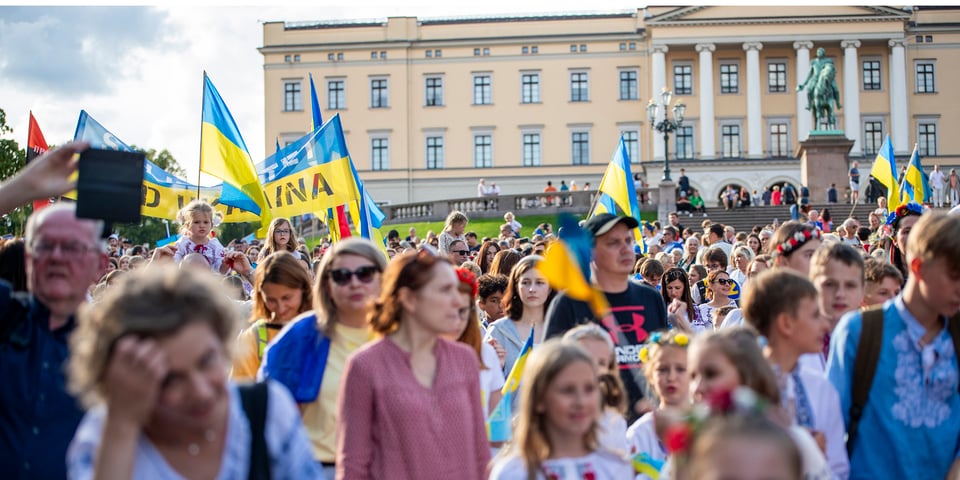
In February, it will be four years since Russia launched its full-scale invasion of Ukraine. The war has led to massive emigration, and approximately 83,000 Ukrainian refugees currently have temporary protection in Norway.
They make up 1.5 percent of Norway’s population.
Half of them—47 percent—say they do not intend to return to Ukraine even if peace is achieved. One third, on the contrary, hope to bring more family members to Norway.
This is documented in the fourth annual survey of Ukrainian refugees’ experiences in Norway (nva.sikt.no).
“We see a change in 2025. Those who have lived the longest in Norway are less likely to want to return than those who have been here for a shorter time,” says Vilde Hernes, senior researcher at the Norwegian Institute for Urban and Regional Research (NIBR) at OsloMet.
Uncertain conditions
In January, she presented the main findings from the fourth annual report on the integration of Ukrainian refugees in Norway, which NIBR prepares on behalf of the Directorate of Integration and Diversity (IMDi).
“Especially those with children are worried about returning – both how another move might affect the children, and what kind of unstable future may await them in Ukraine,” says Hernes.
Better Norwegian language skills, economic progress compared to their life in Ukraine, and strong social integration in a Norwegian local community are three main factors increasing the likelihood of wanting to stay in Norway.
“They are also still concerned about not having a home to return to, they fear an unstable peace, and they worry that a conflict-ridden society awaits them in Ukraine after the war. This makes many hesitant to plan a return,” Hernes says.
Who wants to return?
Only 11 percent of respondents say they will return as soon as the war ends. This is far fewer than Ukraine needs.
“Those who have not found relevant work in Norway, or who are not part of a social network, cite these as the main reasons for considering a return to Ukraine,” says Hernes.
The researchers also find that:
- Fewer men than women want to return.
- The oldest and youngest (adult) age groups are more likely to want to return than those in between.
- Those with close family in Ukraine are more likely to want to return.
“Many emphasise, however, that conditions in both Ukraine and Norway will influence the decision, and that they simply must wait and evaluate the situation as it unfolds,” says Hernes.
Travel restrictions hinder return
In 2023, Norway introduced two new restrictions for Ukrainian refugees: the right to temporary visits to Ukraine was heavily limited, and the possibility of collective protection was reduced for people from areas defined as ‘safe zones’.
“These two restrictions set Norway apart from other European countries. Many Ukrainians consider the travel ban emotionally and practically harmful,” says Hernes, adding:
“It is seen as counterproductive for long-term return. Many believe they should have the opportunity for short visits to Ukraine to gradually rebuild their lives there before moving back permanently.”
Hernes stresses that many factors play a role when Ukrainians consider whether it is best to return to Ukraine or try to remain in Norway.
“Whether they return depends not only on peace. It also depends on whether Ukraine succeeds in creating a state that is safe, just, and inclusive for all its citizens,” says Hernes.
Ukrainians in Norway generally have very high trust in the Norwegian political system, while their trust in Ukrainian institutions remains very low.
“Their expectations for a ‘new Ukraine’ likely reflect the fact that many have now lived in Norway for several years and have become accustomed to more predictable welfare and governance systems, and a society far less affected by corruption,” says Hernes.
Many Ukrainians also believe that the most important thing Norway can do to encourage return is to support Ukraine’s economic and political reconstruction.
“That is more important than receiving personal financial support for returning,” says Hernes.
Mixed signals about the future
The temporary nature of collective protection continues to create significant uncertainty for many Ukrainians.
“They experience a growing gap between their legal status and their sense of belonging in Norway. Many also perceive mixed signals from Norwegian authorities about whether they have a future here,” says Hernes.
Many hope to secure permanent residence through work permits, and half plan to apply once they meet the requirements.
“Most Ukrainians believe Norwegian authorities will introduce more differentiated residence arrangements – for example, distinguishing between people from different regions of Ukraine, or based on employment or self-sufficiency,” says Hernes.